
What We Have Is Worth Protecting
Ku-ring-gai’s Wildlife and Trees
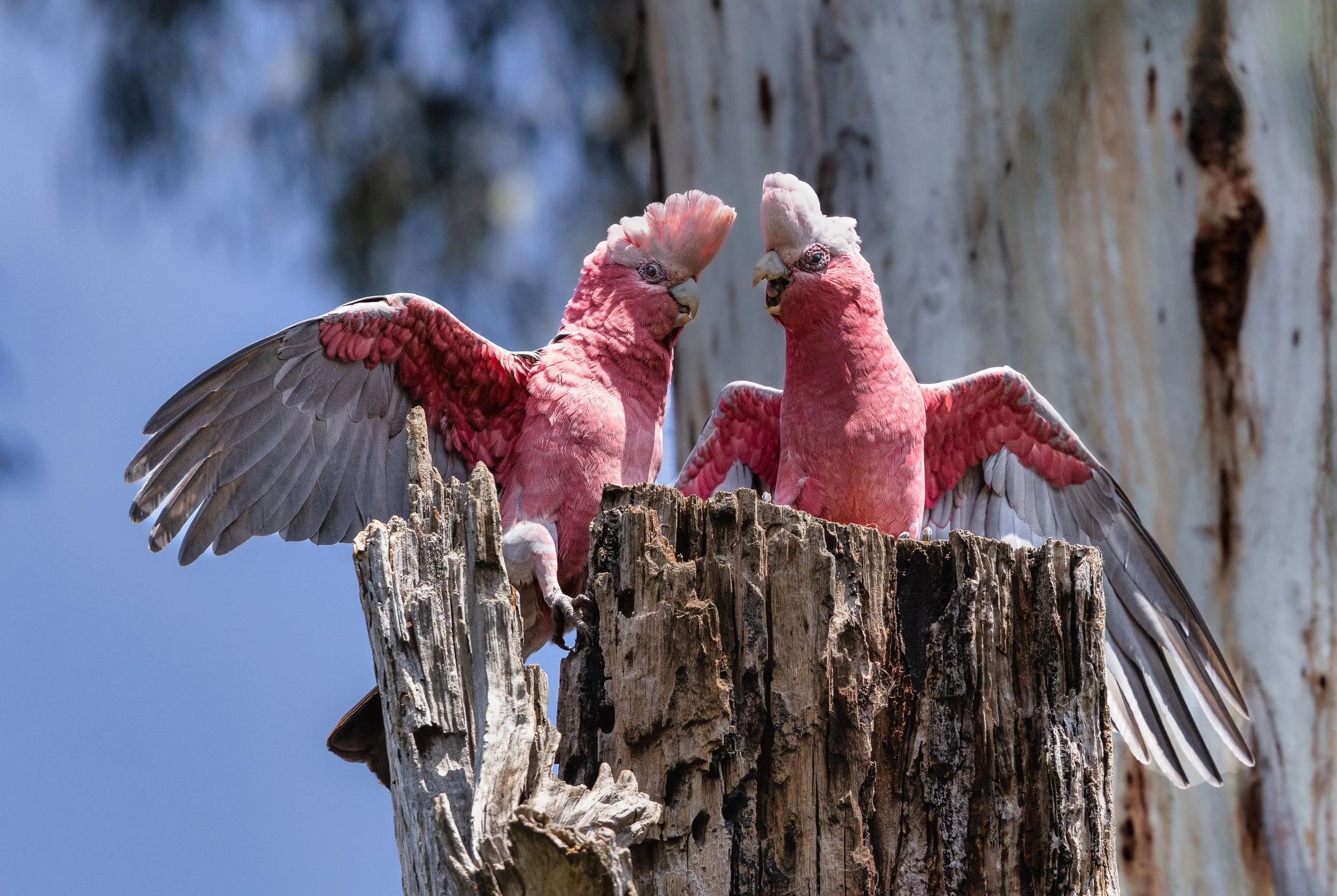
Two galahs spread their wings at a tree hollow.
This is the wonder living on our doorsteps. Every photograph was taken here in Ku-ring-gai. Its future is in our hands—and every one of us can help keep it safe.
A living landscape
Our suburbs form part of a living ecosystem of mature trees, gardens, creeks and remaining native bushland. Together, these places provide food, shelter, nesting sites and pathways through which wildlife moves.
A mature garden tree may feed parrots and lorikeets. An old eucalypt may provide a hollow for a possum, cockatoo or owl. Native shrubs offer shelter for smaller birds. A leafy backyard can help connect two larger patches of habitat.
It is easy to take this abundance for granted. But it has not survived by accident.
Ku-ring-gai Council deserves recognition for its work maintaining urban forest, restoring native vegetation and supporting planting projects, including the Tiny Forest at West Pymble. These efforts reflect years of decisions recognising that wildlife and trees are part of what makes this place special.
Protecting that legacy requires continuing care.
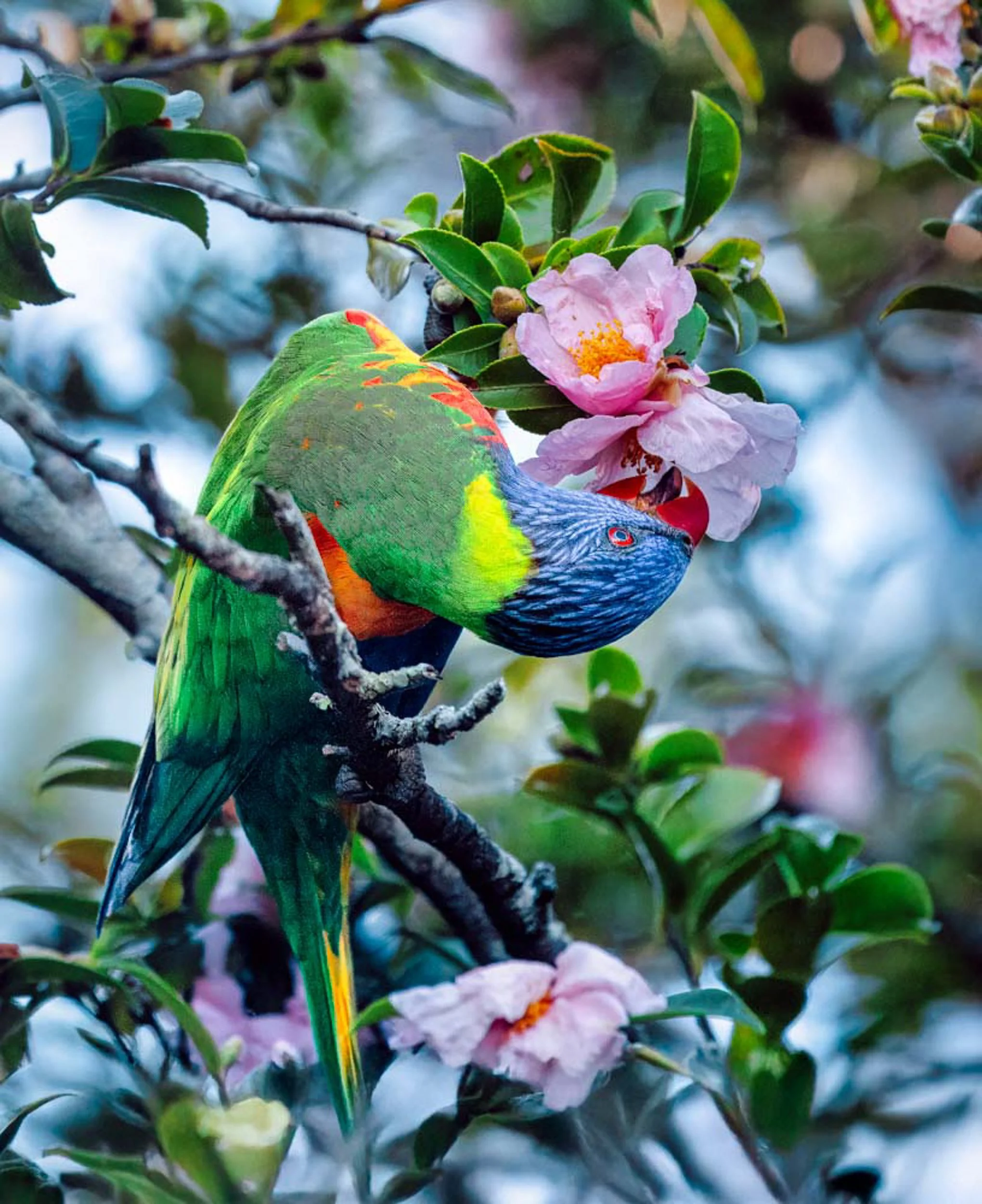
A Rainbow Lorikeet feeds on camellia flowers—a colourful visitor to a suburban garden.
Housing matters. So does habitat.
Sydney needs housing. People need somewhere to live, and housing near public transport can improve access to jobs and services while reducing dependence on cars.
But different ways of delivering housing have different environmental consequences.
Ku-ring-gai’s experience with Transport Oriented Development shows why the details matter. Following the introduction of state planning controls around Gordon, Killara, Lindfield and Roseville, Council developed an alternative approach intended to accommodate housing while better protecting heritage, environmental values and tree canopy.
The NSW Government formally adopted an amended version of that alternative in November 2025. Both Council’s account and the State Government’s announcement describe the outcome.
That experience demonstrates the value of examining where and how we build. The questions remain:
What should we retain? Where can growth cause less harm? And which environmental losses are unacceptable?
Trees grow across electoral cycles. Wildlife depends on habitat that continues across planning boundaries. Those connections need to be considered before development decisions are made.
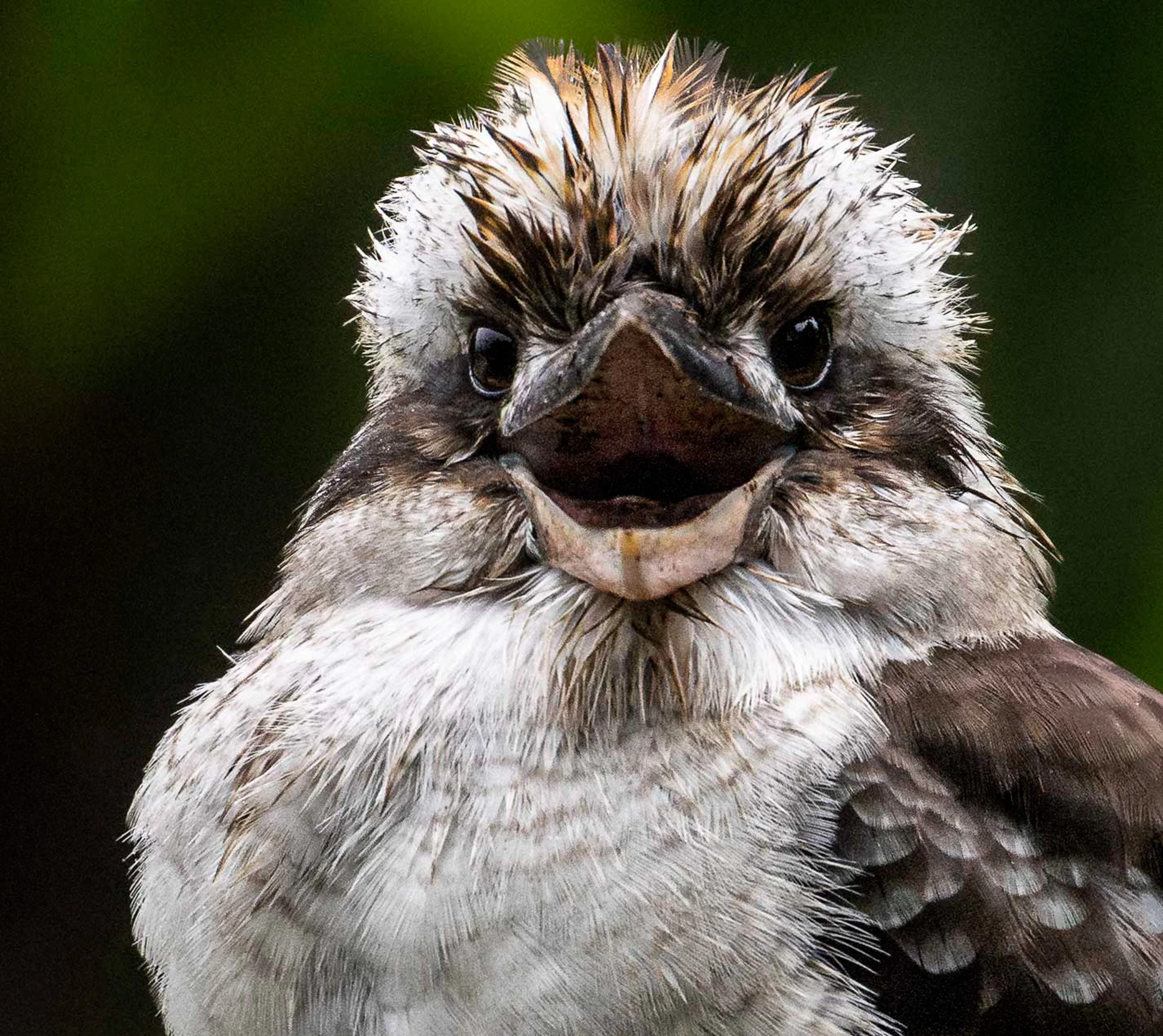
A kookaburra with ruffled feathers and unmistakable character—one of Ku-ring-gai’s familiar residents.
Some things cannot simply be put back
A mature habitat tree is much more than a trunk and a crown of leaves.
It offers bark, flowers, insects, shade, shelter and sometimes nesting hollows. It supports relationships that have developed over decades. A replacement sapling may eventually become magnificent, but it cannot immediately provide those same things.
One tree removed does not necessarily equal one tree planted.
This matters especially where threatened ecological communities, including Sydney Turpentine-Ironbark Forest, survive in fragments. Protecting what remains must come before assuming we can recreate it elsewhere.
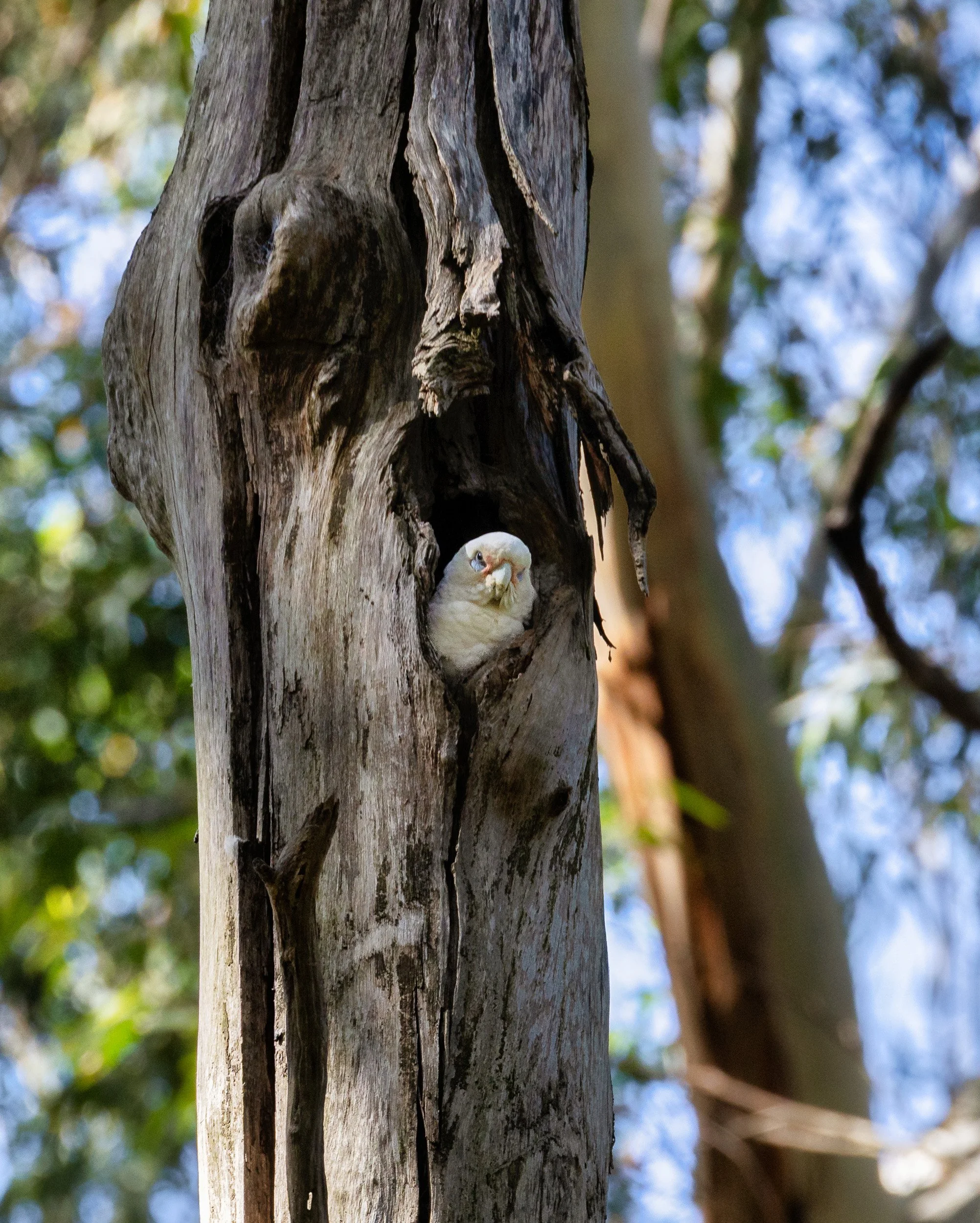
A cockatoo at a hollow in a mature tree.
This is what lives here now
Words such as canopy, biodiversity and wildlife corridors can become abstract in planning discussions.
These photographs give them faces.
They mean the lorikeet outside your window. The kookaburra watching from a branch. The rosella moving through foliage. The magpies raising their young. The King Parrots arriving in the garden.
Habitat can disappear gradually: one tree removed, one garden paved, one patch of vegetation cleared. Each change may seem small, but together they can leave wildlife with fewer places to feed, nest and move safely.
We should value these connections while they still exist.
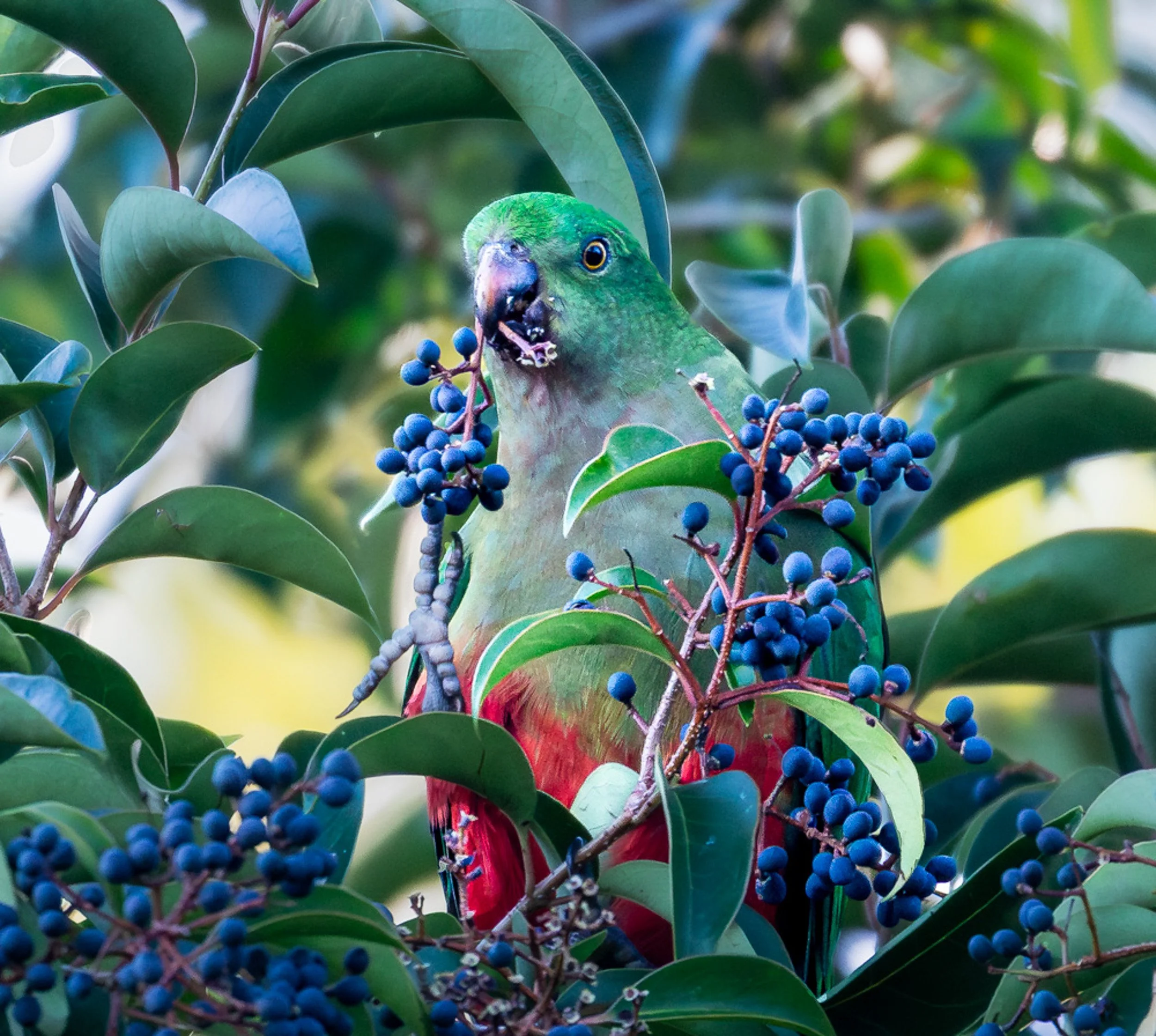
Female King Parrot feasting on berries.
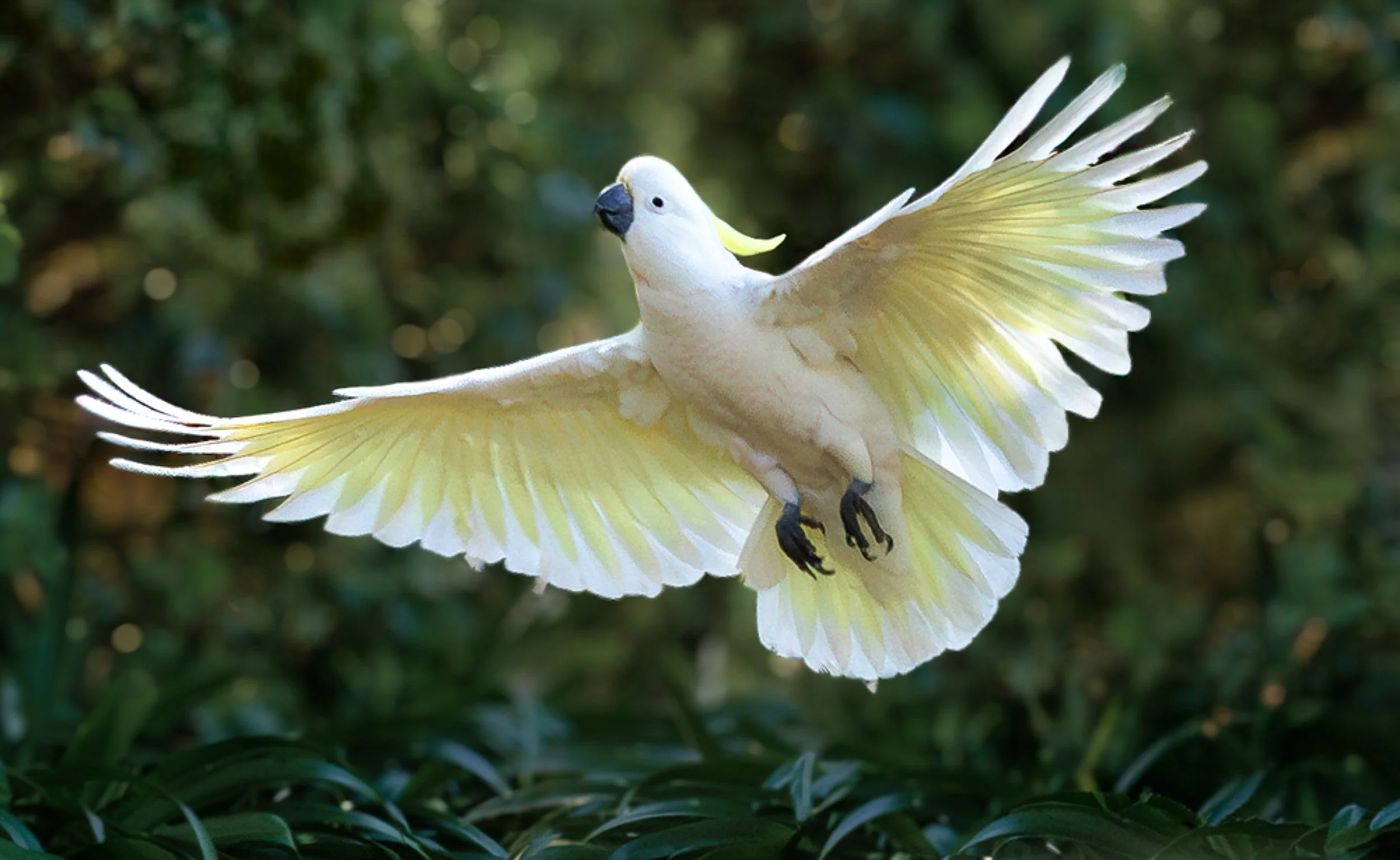
A Sulphur-crested Cockatoo takes flight—part of the everyday wonder of Ku-ring-gai.
What we can do in our own gardens
There are practical ways to contribute, whether we have a large garden, a courtyard or a balcony.
Retain established trees where possible. Seek qualified advice about managing them safely rather than assuming removal is the only option.
Plant for food and shelter. Ask a local native nursery or Council about plants suited to your space and local wildlife. Include shrubs and groundcovers as well as trees.
Keep some living ground. Where practical, retain planted areas instead of replacing every surface with paving. Small gardens can contribute to a greener neighbourhood.
Join a local effort. Bushcare, creek clean-ups and habitat restoration turn individual concern into shared action.
We can also support neighbours who retain trees and speak up when planning proposals threaten important habitat.
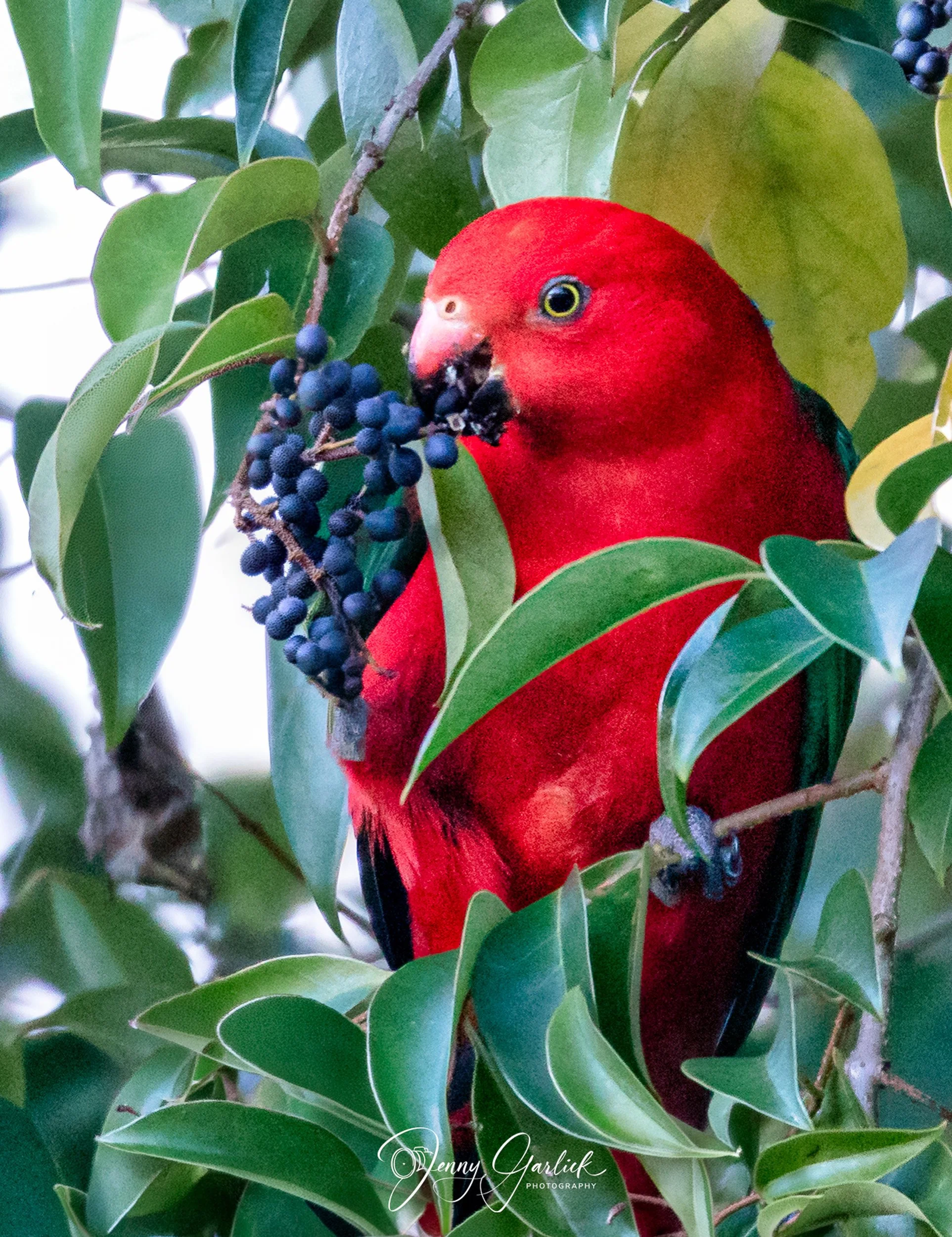
Male King Parrot feeding on berries.
What could governments do better?
Residents’ efforts need support from good planning.
Development should retain mature habitat wherever reasonably possible, provide meaningful deep-soil areas for trees and maintain connections between green spaces. Landscaping needs to function as habitat as well as look attractive on a plan.
Councils and state government can support locally native planting, restore creek corridors and help communities care for street trees and suitable verges. New planting also needs maintenance, water and enough space to survive.
Suitable, already disturbed sites should be carefully considered for housing.
Population, housing, infrastructure and environmental planning need to work together. Growth brings responsibilities to provide homes and services while protecting the natural systems that make communities liveable.
A useful principle is:
Where several viable ways exist to achieve a planning objective, favour the option that causes the least irreversible environmental harm.
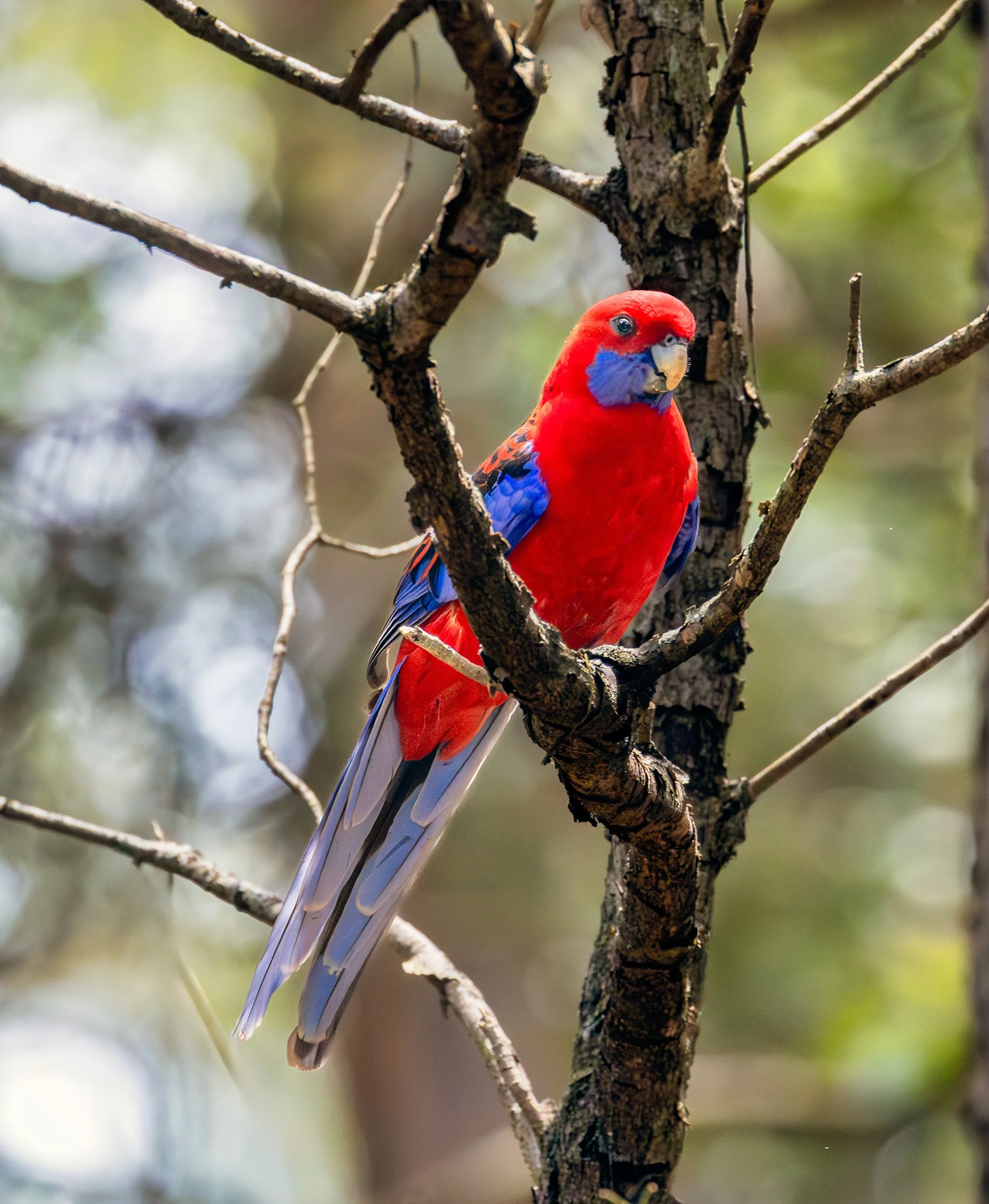
A Crimson Rosella brings a flash of scarlet and blue to Ku-ring-gai’s trees.
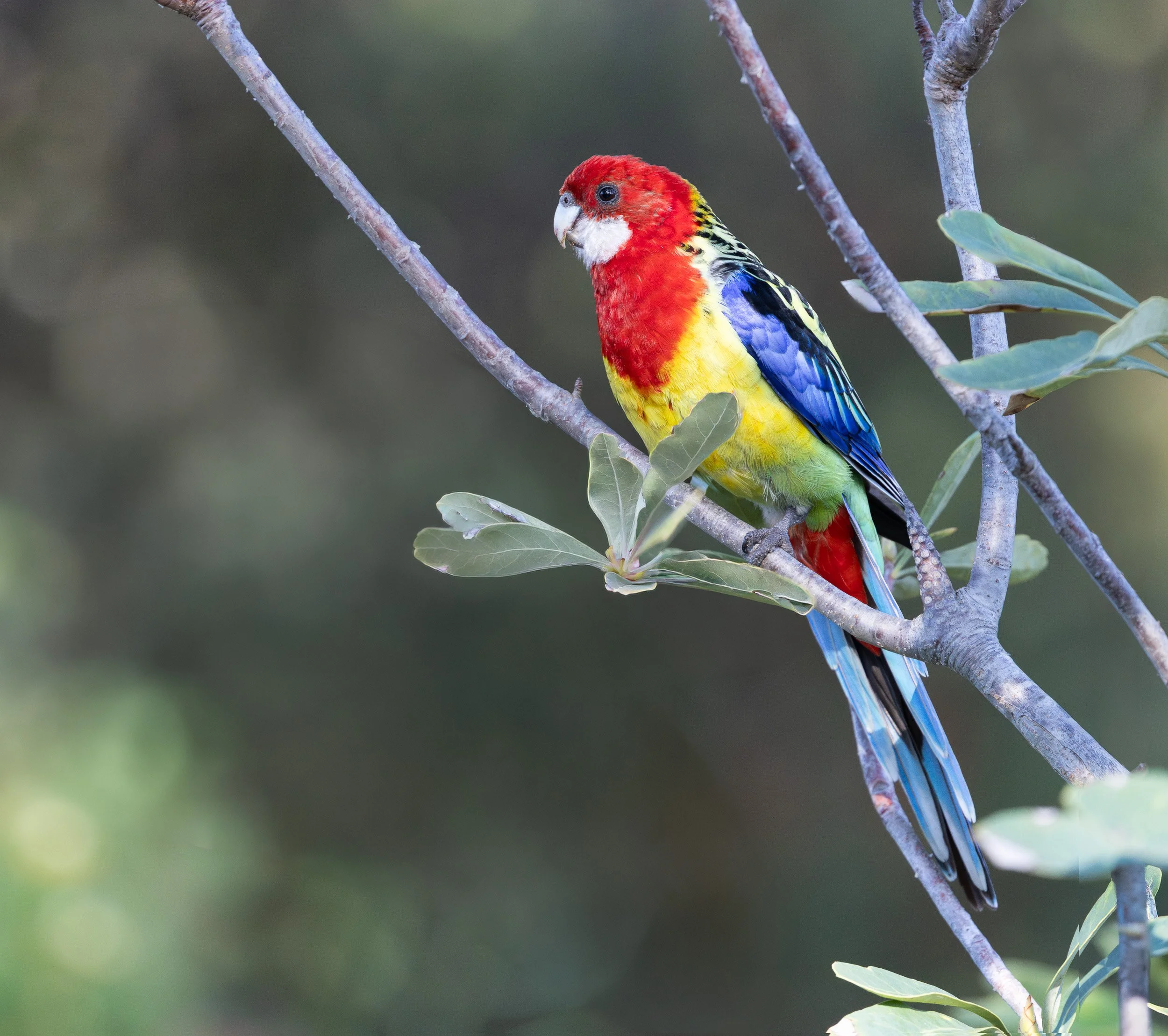
An Eastern Rosella perches among the branches, its vivid colours brightening a quiet corner of Ku-ring-gai.
Before you vote, ask what they will protect
The next NSW state election is scheduled for Saturday 13 March 2027. It offers an opportunity to ask every candidate how they will protect wildlife while delivering the housing our communities need. NSW Electoral Commission
Look for specific commitments, funding and accountability. Ask:
Will you protect mature habitat trees and threatened ecological communities, with enforceable rules and penalties for unlawful clearing?
Will you require developments to retain meaningful habitat, connected canopy and sufficient deep soil for large trees?
Will you provide ongoing funding for bushland restoration, wildlife corridors and wildlife rescue?
Will you prioritise suitable, already disturbed sites for housing, reducing avoidable habitat loss?
Will you publish results, showing habitat retained and lost, and whether replacement planting survives?
Compare candidates’ written policies and records. Ask what they will deliver, by when and with what budget. Consider these questions when assessing candidates for both houses of the NSW Parliament.
A promise to plant trees is a start. It should come with a plan to protect the habitat already here.
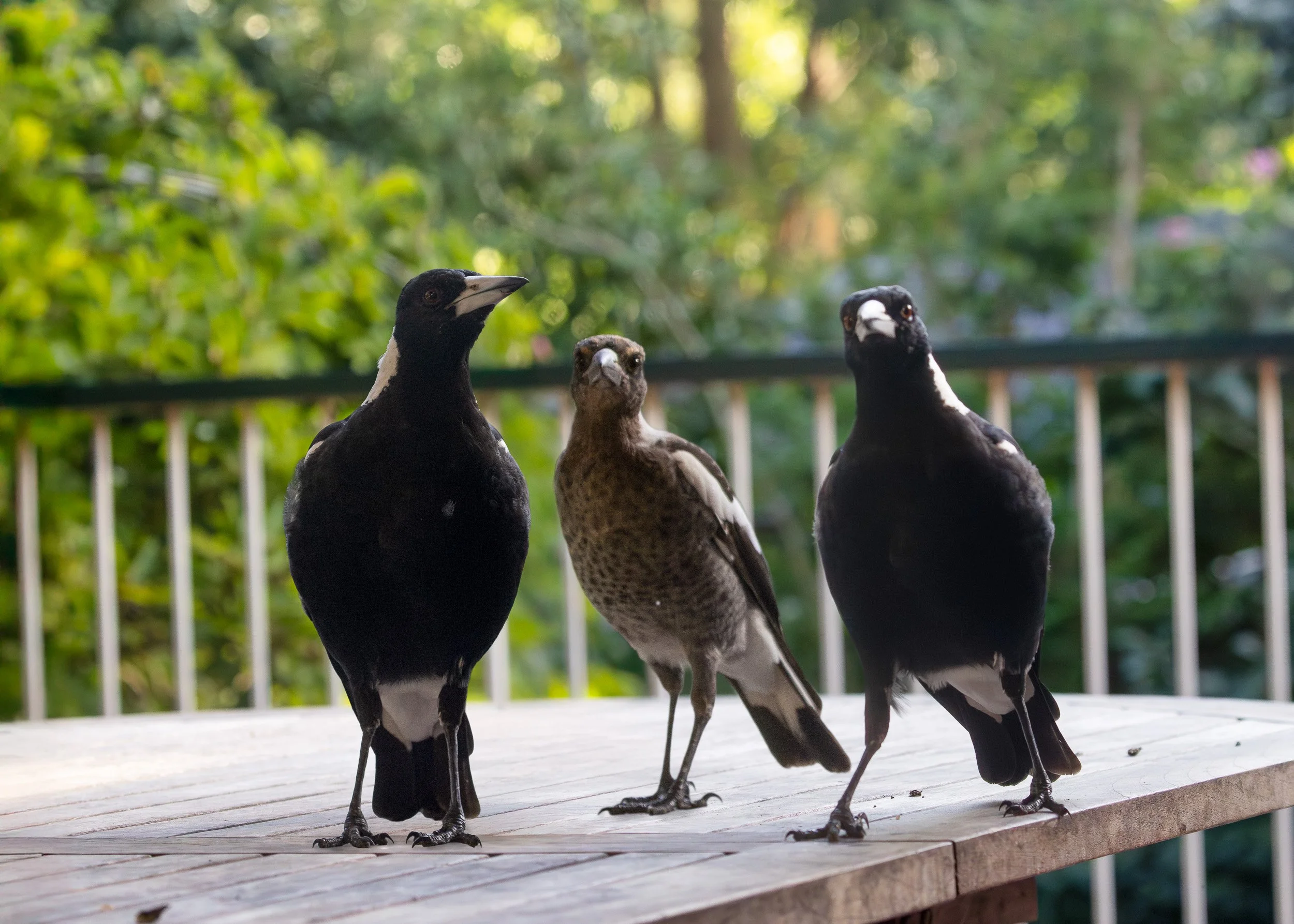
A magpie family visits the garden, their youngster standing between two adults—a new generation sharing our neighbourhood.
Economic priorities, governments and planning rules will change. A mature forest takes far longer to grow, and wildlife depends on decisions being made today.
We are custodians of the trees outside our windows, the creeks behind our houses and the animals living among us.
What we have is beautiful. What we have is precious.
Choose something you can protect in your own neighbourhood—and ask those seeking your vote what they will protect, too.
Our responsibility is to ensure that this abundance lasts.
Our backyards must not fall silent.
All photographs taken in Ku-ring-gai by Jenny Garlick.
