
Chasing Light Amongst the Paper Daisies
Dedicated to My Friend Jan, Who Always Loves Flowers
I went to visit the paper daisies at the Australian Botanic Garden Mount Annan, in Sydney Australia, on a very bright, cloudless afternoon. There is only a brief window of around two weeks each year to see these blooms at their best, and last Thursday it was definitely game on. The light was initially hard and unforgiving, so I waited for the sun to begin sinking and then I got to work.
I wanted to photograph the daisies in as many different ways as possible — to showcase their beauty, tell their story, and also create more ethereal, abstract images that focused on their gorgeous palette of pink and white, punctuated by their cheerful yellow daisy companions.
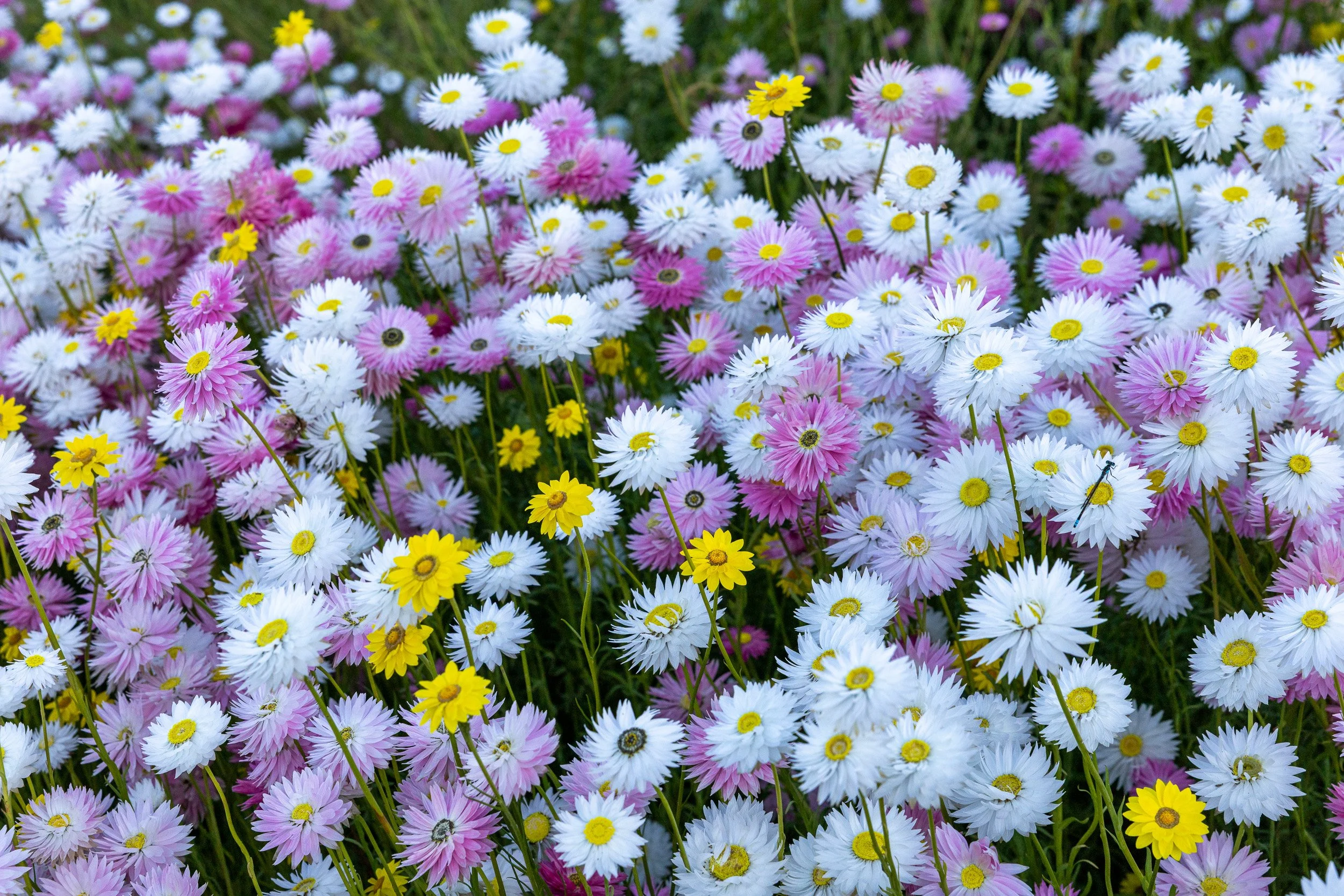
My first aim was simple: a bright, sharp carpet of flowers — a celebration of white and pink, punctuated by little pops of yellow. I wanted it to feel abundant and joyful, just a splendid sweep of flowers. Sadly I had to compose carefully around the numerous flattened patches where people had stepped onto the flowers for photographs. It was disappointing to see sections of these beautiful beds crushed simply for an Instagram shot.
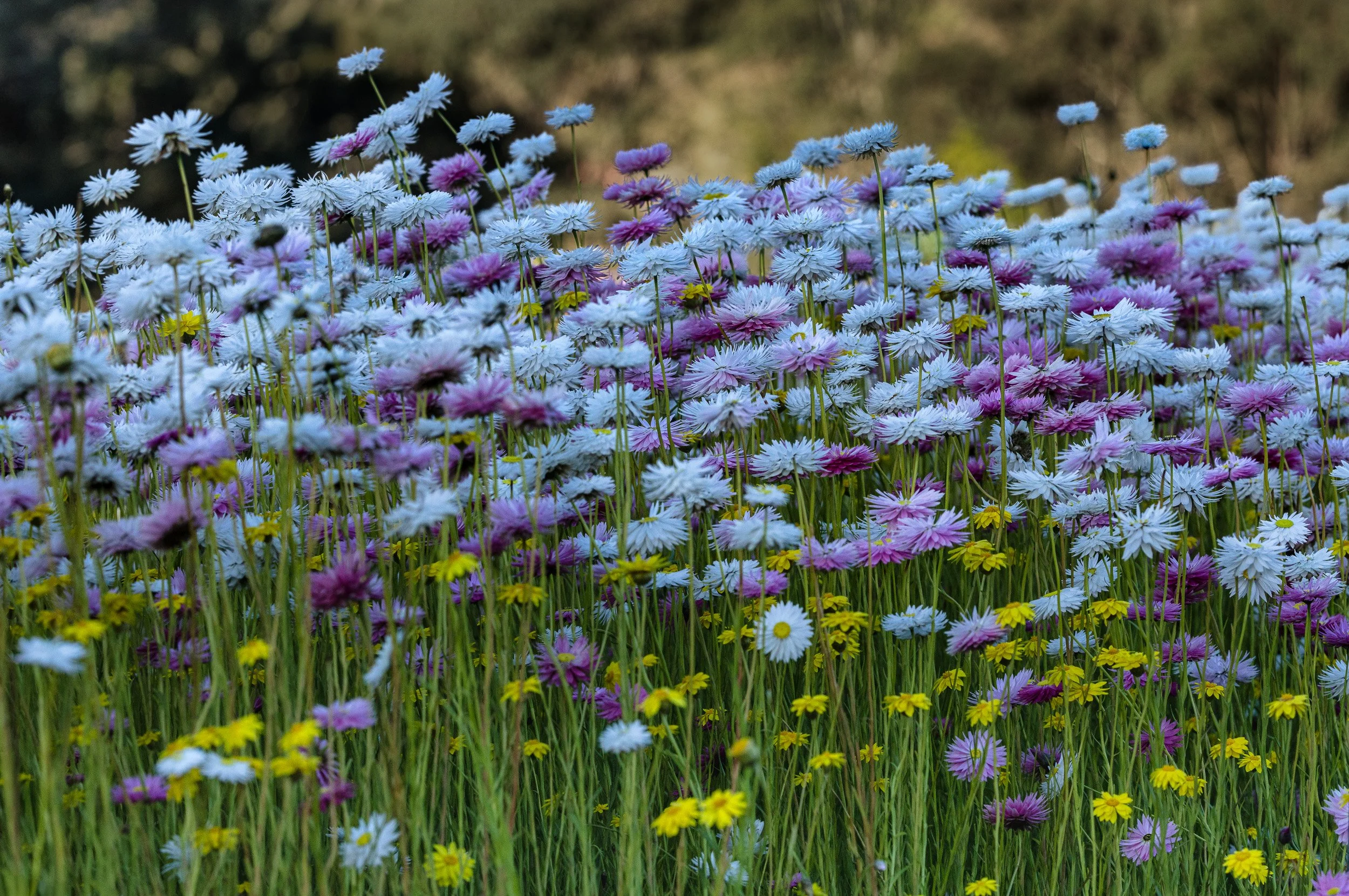
Next, I wanted to create more of a profile of the paper daisies themselves. I got down low so that their long green stems became an important part of the photograph, with shorter blooms scattered between them. From this angle, the flowers formed a soft sea of pink and white floating above a layer of strong vertical green stems filled with a sprinkling of yellow. I especially loved the way the above image has distinct layers, giving it both structure and depth.
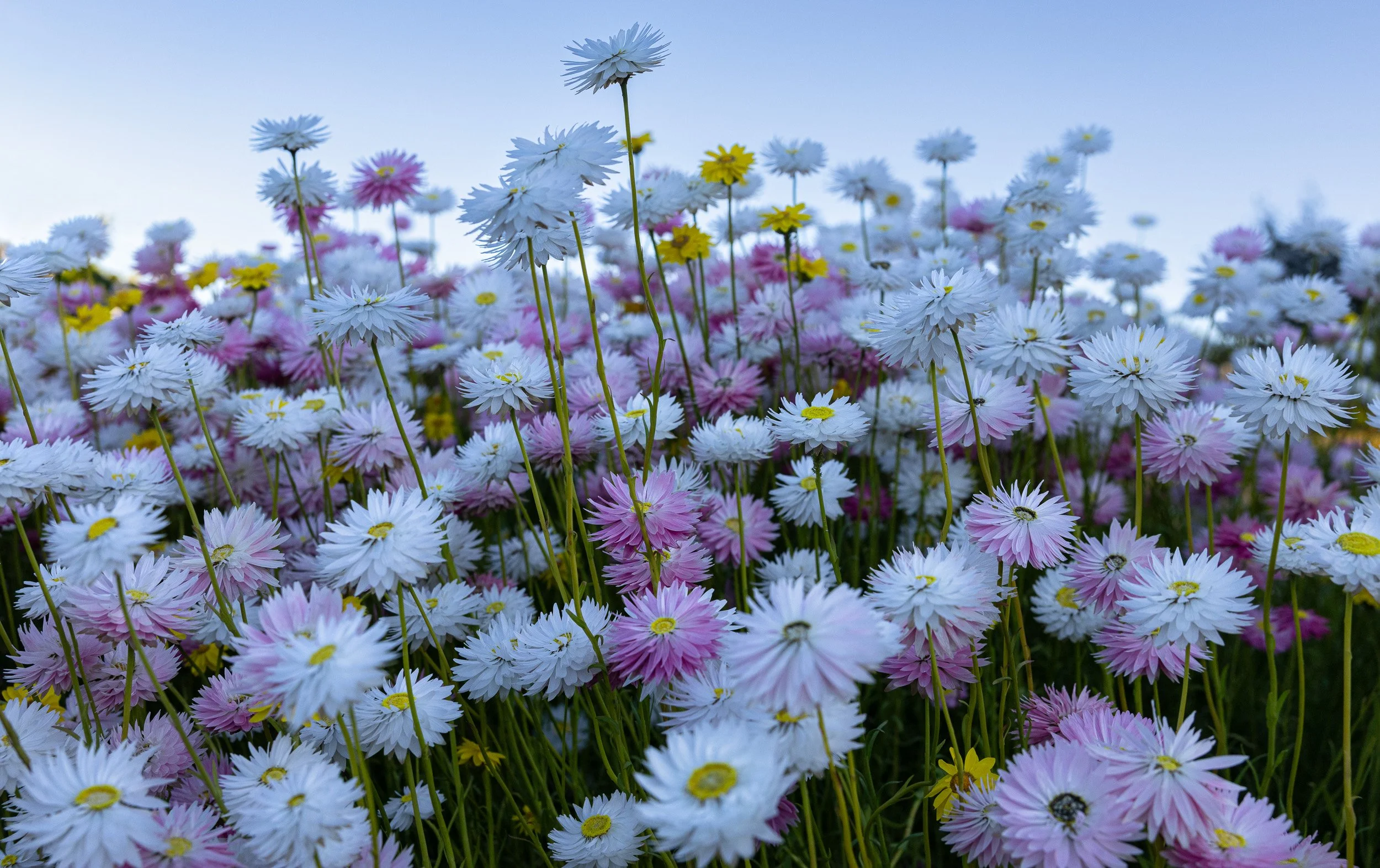
In this image, a few of the tallest daisies stand proudly against the open sky, reaching above the mass of flowers. I liked that the composition wasn’t overly neat or ordered. For me, it was perfectly imperfect.
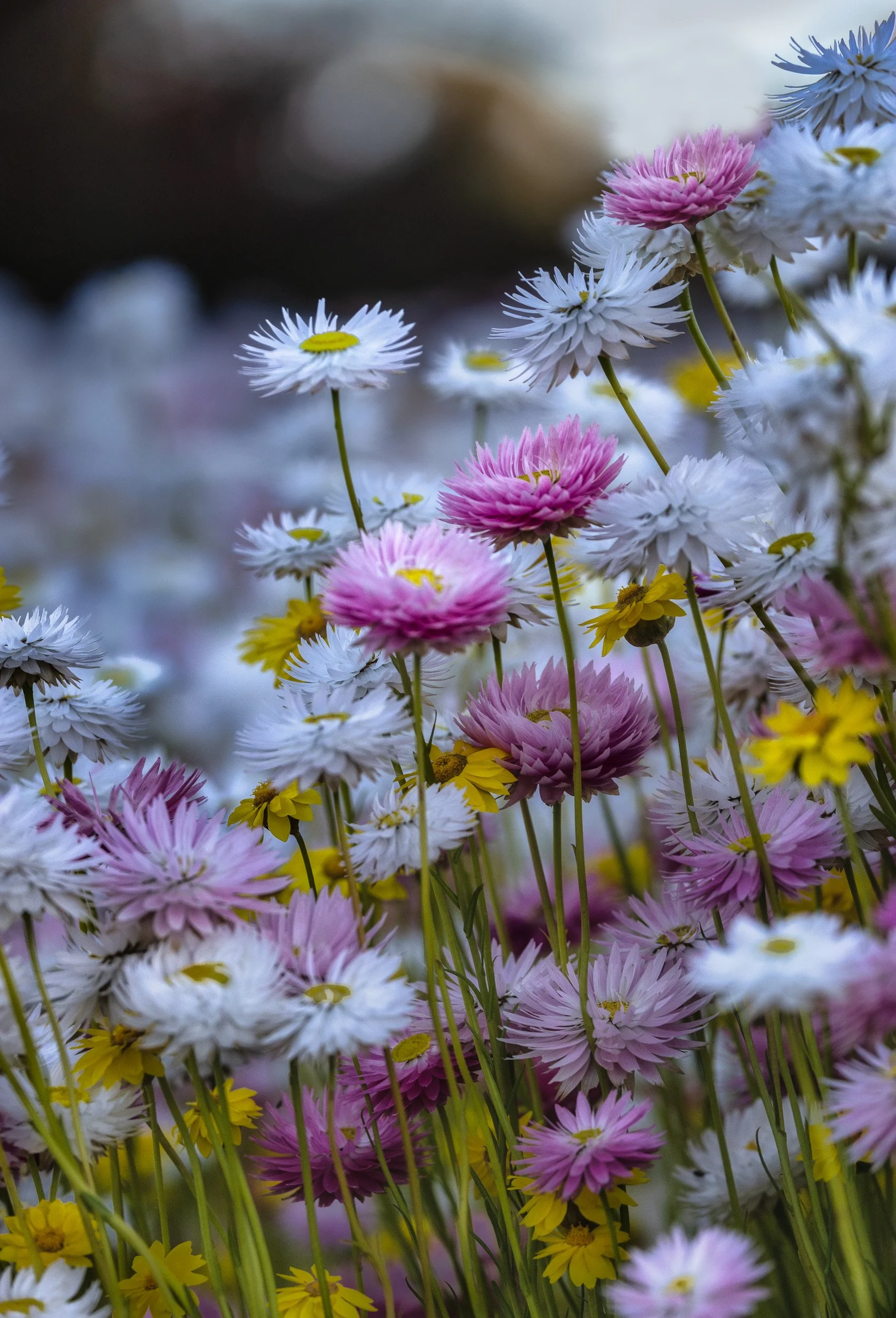
I tried a similar idea again, this time shooting more diagonally across the flowers, with one white bloom and its trio of pink companions becoming dominant in the frame.
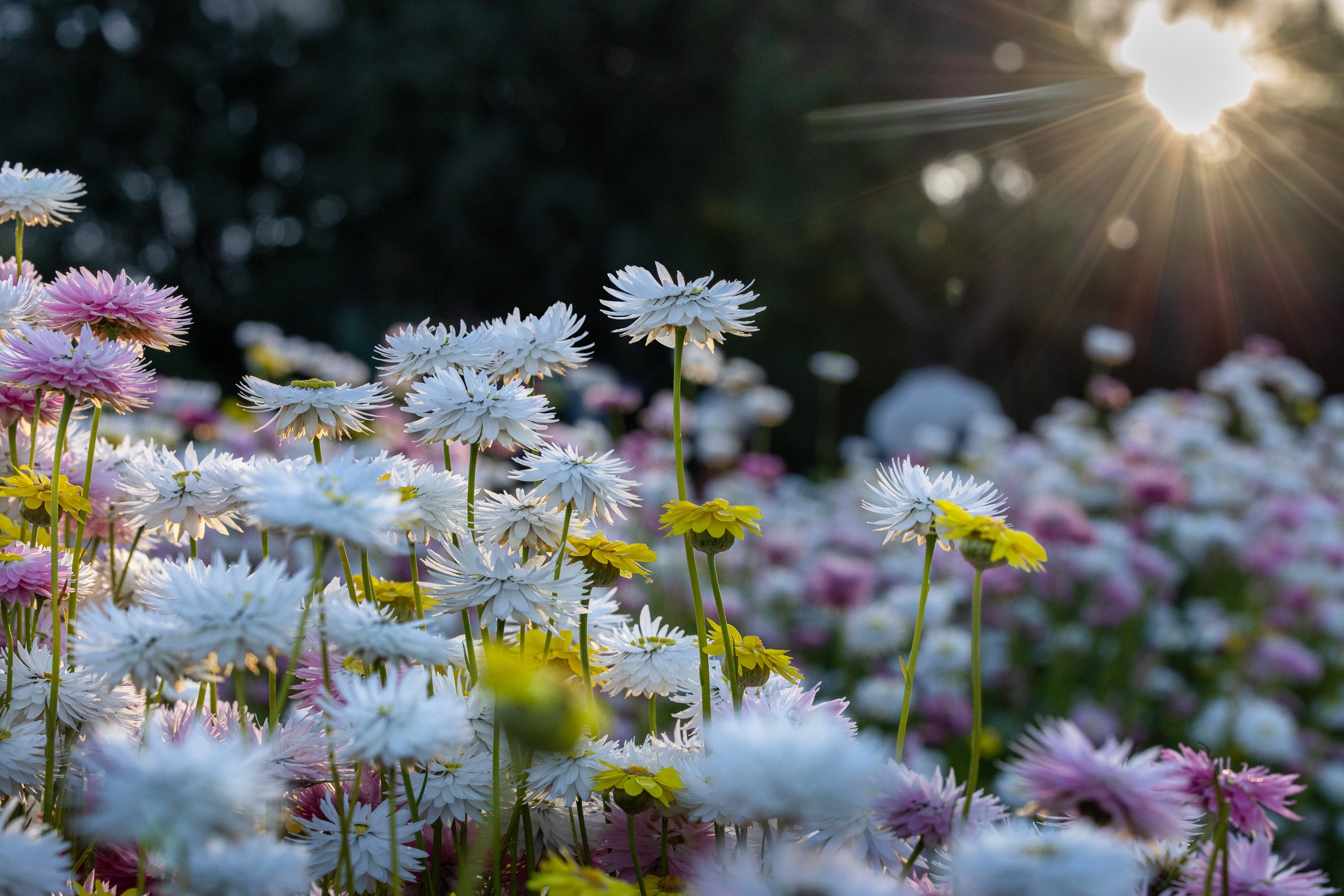
By then, the sun was beginning to disappear behind the trees. I crouched down and photographed upwards towards the light. Using an aperture of f/16, I was able to turn the setting sun into a starburst, with a little lens flare thrown in for good measure.
The low sun backlit the tall daisies beautifully, catching the edges of the petals and illuminating individual blooms.
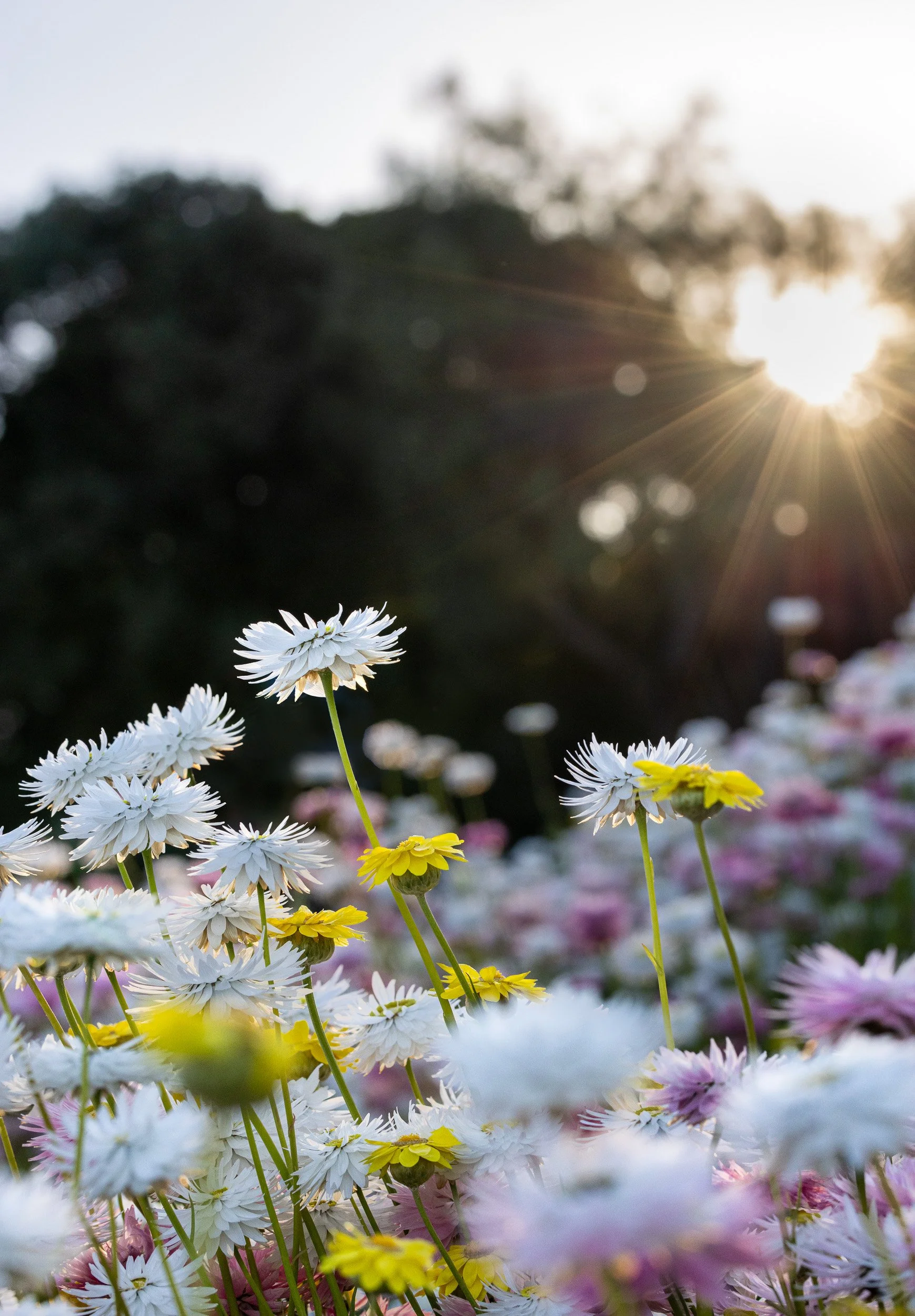
Again, I didn't want the scene to feel too tidy.
I wanted it to feel as though I had stumbled across an enormous field of flowers in a secret clearing in the forest — rather than standing in a botanic garden, with the daisies contained within two garden beds and people wandering around me.
That illusion is one of the things photography can do so well. By changing your position, your focal length and what you choose to leave outside the frame, an ordinary location can become somewhere completely different.
Creating the ethereal images
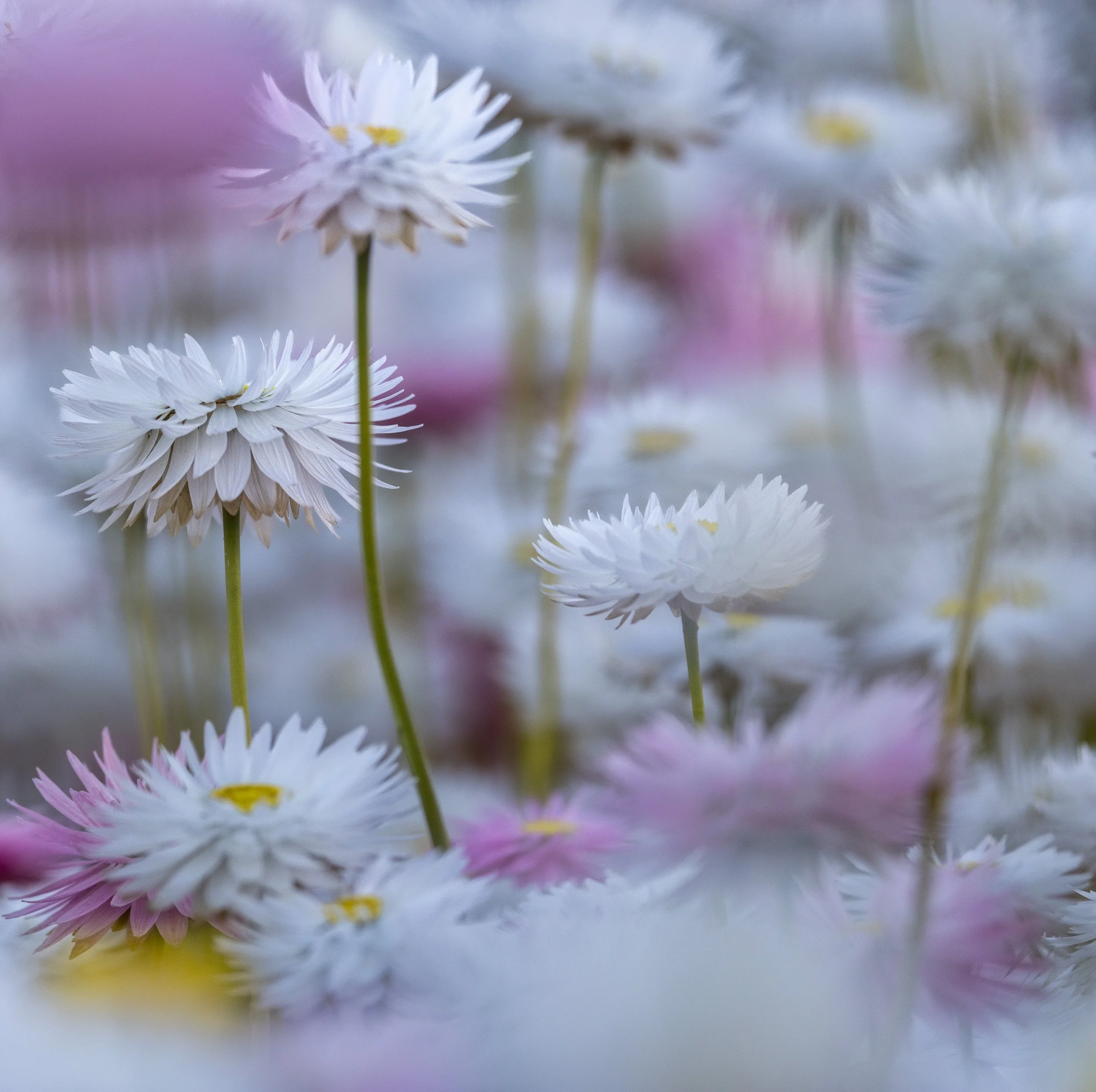
I then moved on to a technique I particularly love for creating soft, ethereal flower photographs.
The daisies were incredibly dense, which meant compositions could very quickly become busy and chaotic. Instead of fighting that, I decided to use it.
I placed the camera extremely close to flowers in the foreground and photographed through their petals. Because those petals were so close to the lens, they dissolved into soft washes of colour and created a dreamy haze around the flowers farther away.
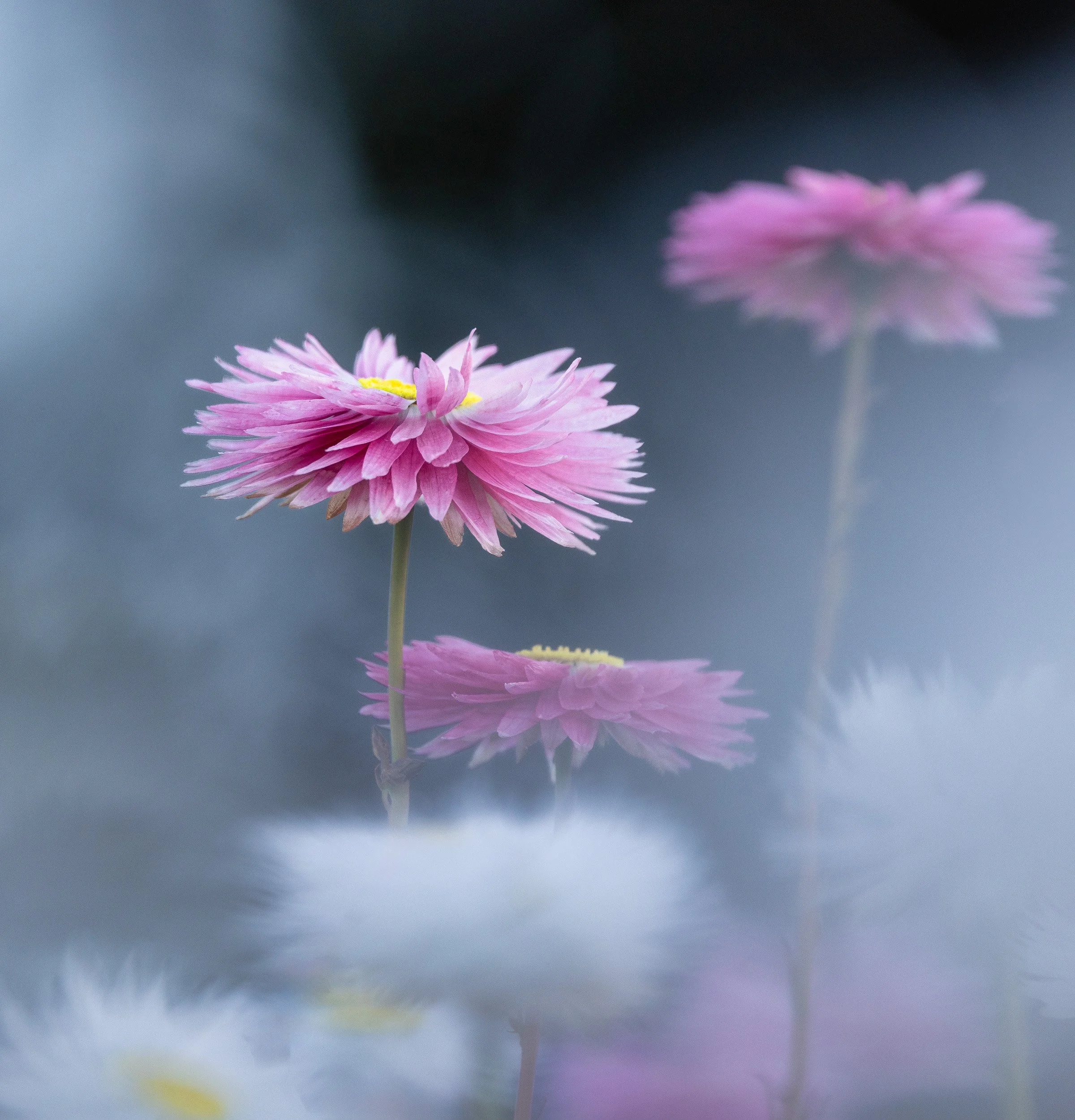
Very little post-processing was required to create the effect. Most of what you see was produced in camera.
Using my widest available aperture of around f/4.5, combined with the close distances and the compression of my 70–200mm lens, I achieved a very shallow depth of field. I could then create different layers of sharpness within that haze — one flower might be crisp while others gradually disappeared into softness.
The photographs were still visually full, because there were flowers everywhere, but many of those flowers now melted into one another rather than demanding equal attention.
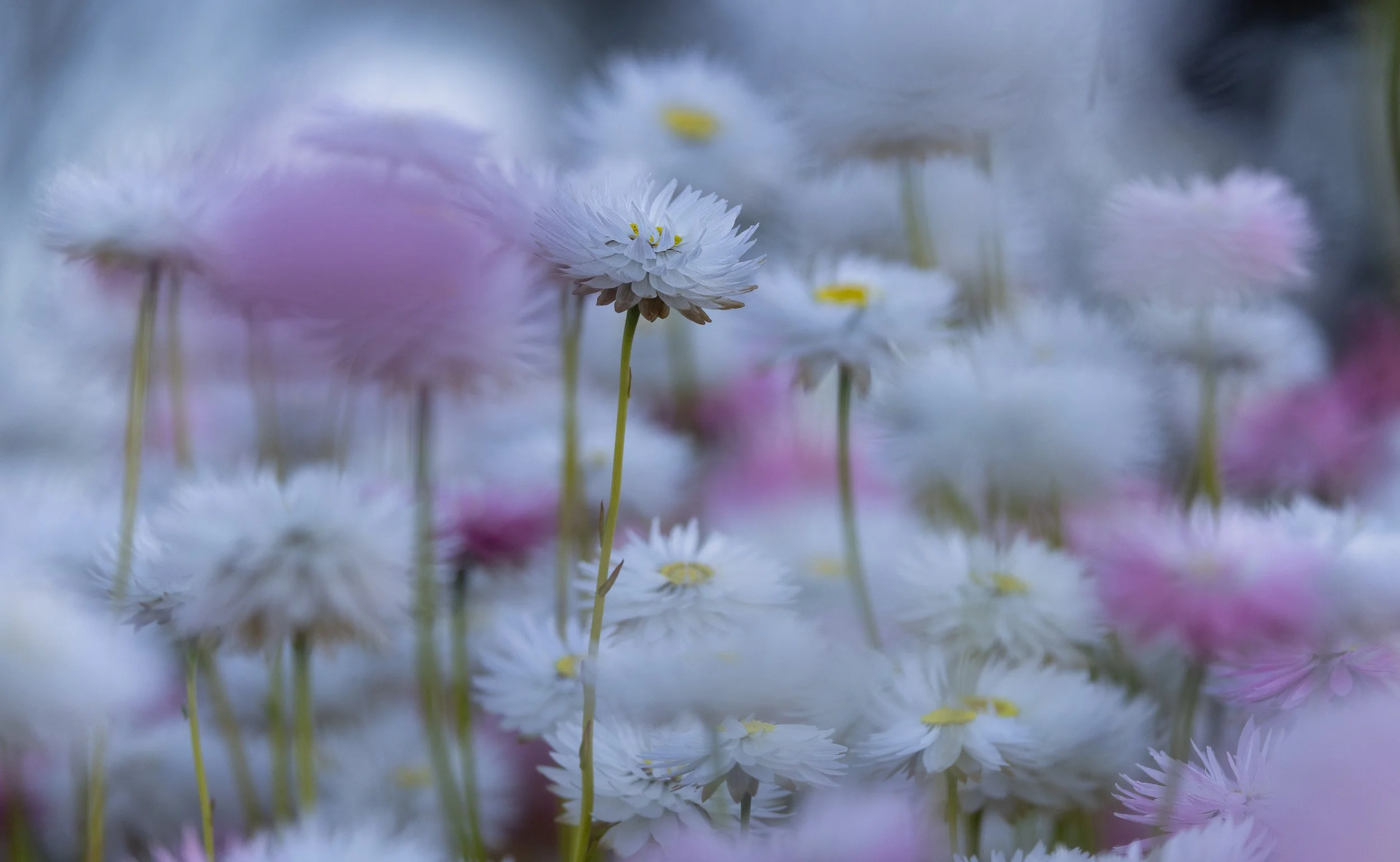
Some flowers were inevitably cut by the edges of the frame. With such a dense field, achieving a perfectly clean crop was almost impossible — and in the end I decided I didn't want one. I liked the feeling that the flowers continued beyond the frame. It made the images feel spontaneous and real, as though the photograph were simply a small window into a much larger sea of daisies (which they were)
Isolating individual flowers
Now it was time to move from abundance to simplicity.
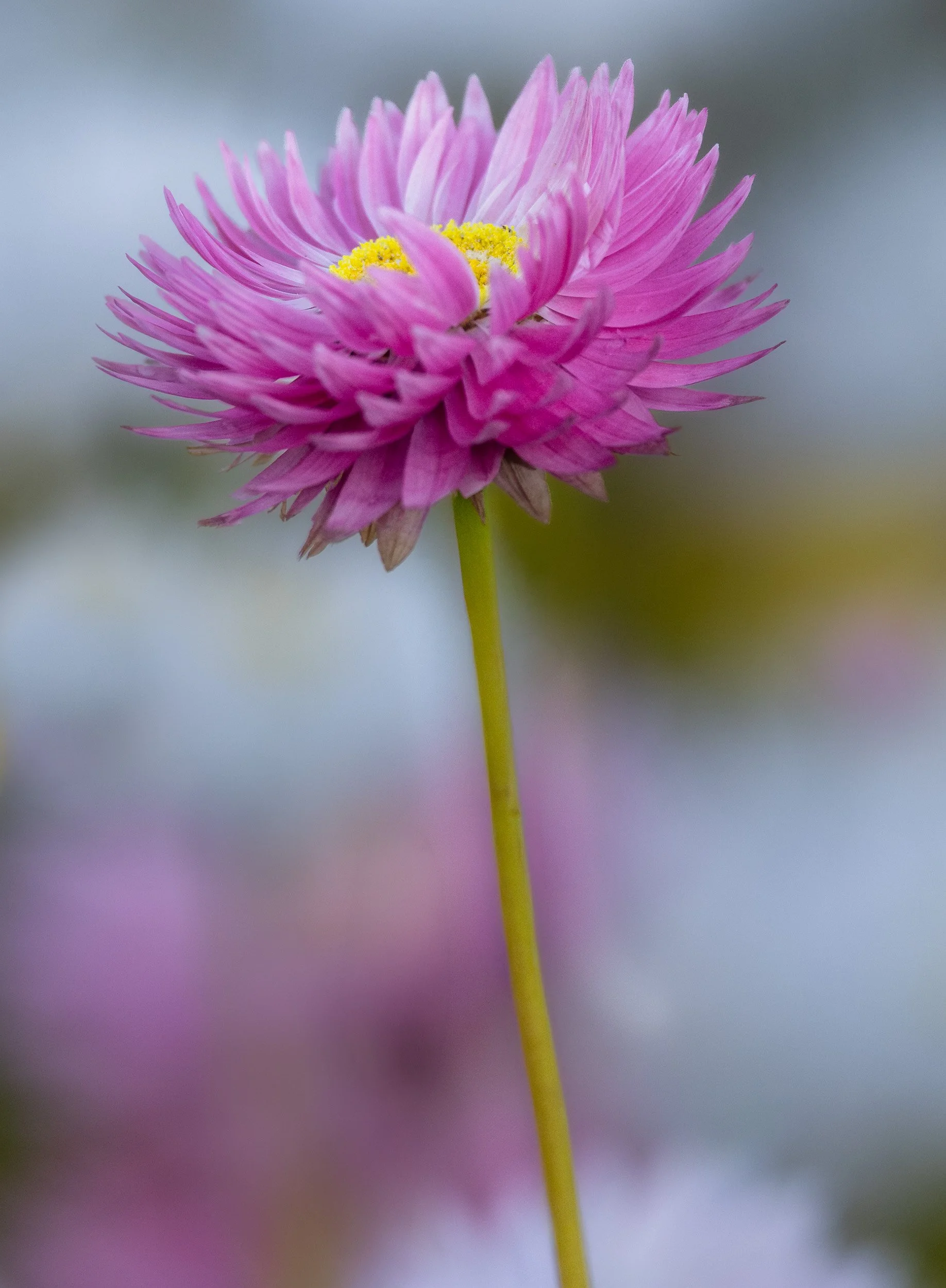
Using the shallow depth of field created by the longer lens, I isolated a single pink flower from everything surrounding it. Its stem leans lazily across the frame, creating a gentle movement through the image, while the background disappears into soft colour.
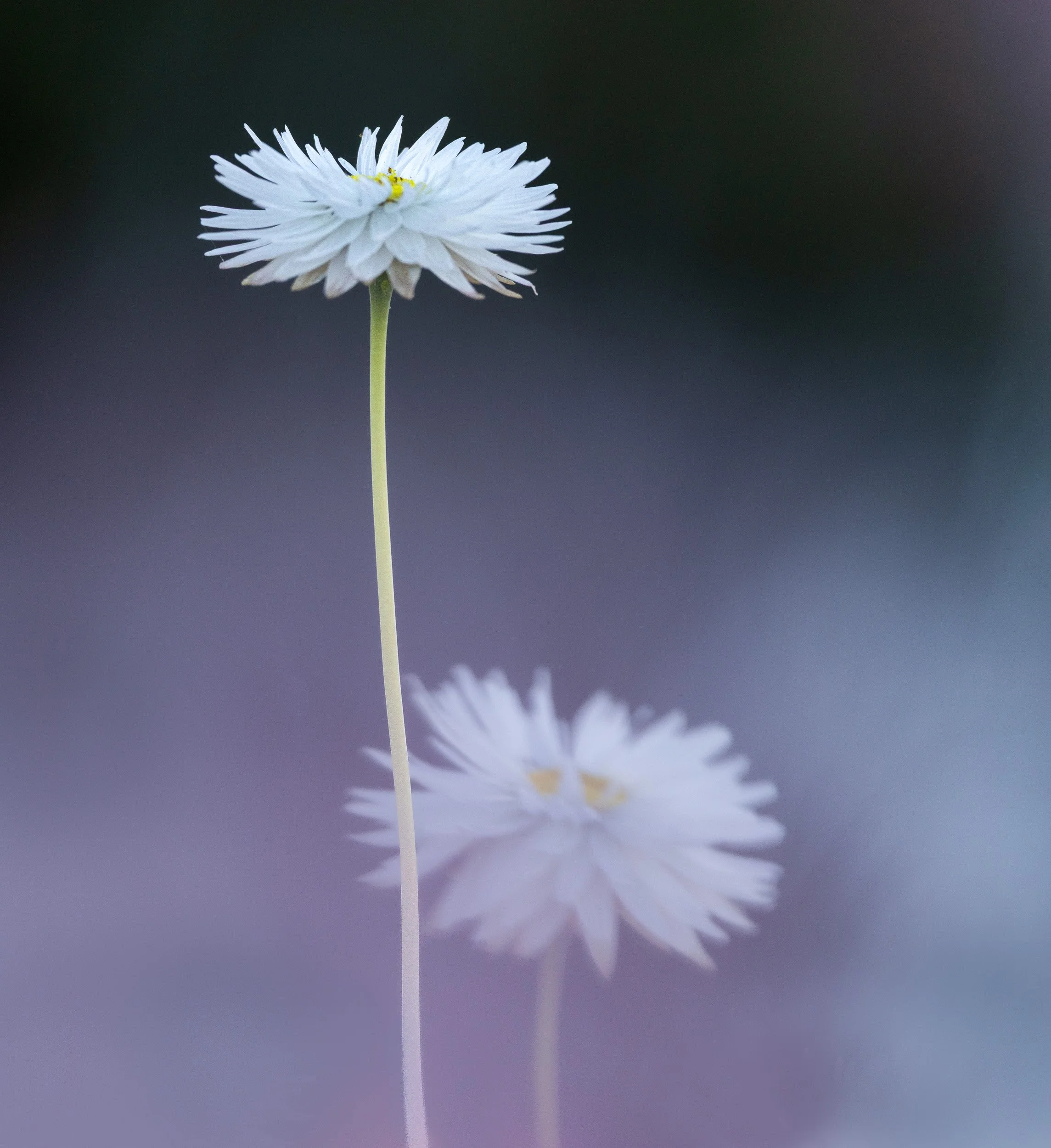
For several of the other photographs, I combined both techniques — isolating a flower while still shooting through petals in the foreground. This gave me a recognisable subject sitting inside that soft, ethereal haze.
Finally, I experimented with allowing the main flower being in soft focus.
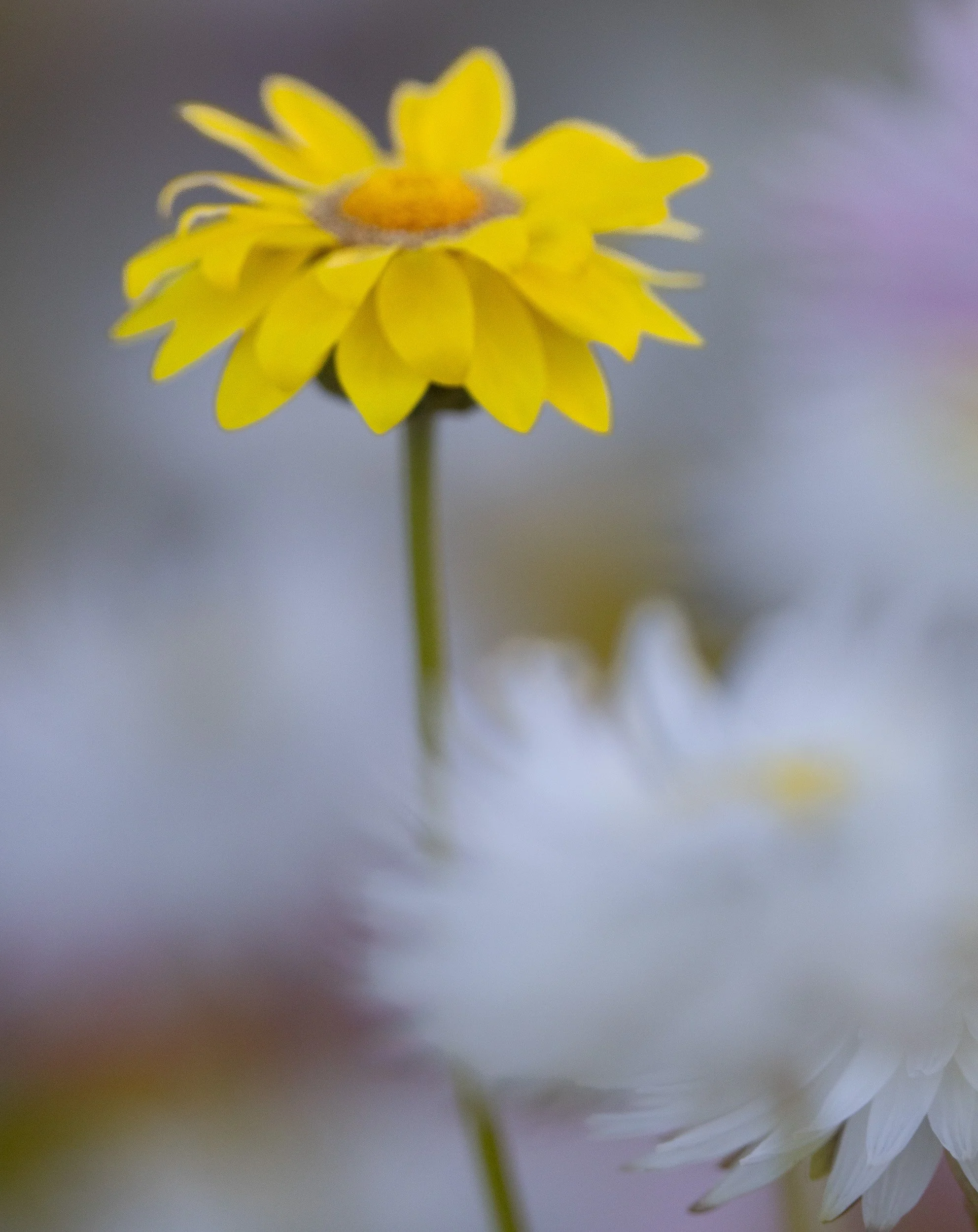
This yellow daisy stands upright within a dreamy blur, its petals softly draping away from its centre. The image evokes a feeling of peace in me and simply makes me feel good.
That was really what I wanted from this afternoon.
Not simply thirteen different records of what paper daisies look like, but photographs that moved between abundance and isolation, sharpness and softness, reality and something slightly dreamlike.
The flowers didn't change.
Only the way I chose to look at them did.
