
City Street Portraits: A Night Photography Workshop in Sydney
A few weeks ago, I joined the Sony Scene City Street Portraits workshop at Barangaroo, led by Sydney photographer and Sony Digital Imaging Advocate Hanna Saba—and it was fabulous.
The workshop focused on creating street-style portraits using the city as both a backdrop and a source of light. We explored ambient light, LED lighting, posing, composition and how to balance additional lighting with the existing city lights. As a wildlife photographer, it was lovely to have a subject who stayed still and posed for the camera—and I didn’t have to stand waist-deep in mud for three hours to get the shot! However, I soon discovered that portrait photography brings its own challenges, along with plenty of unexpected moments.
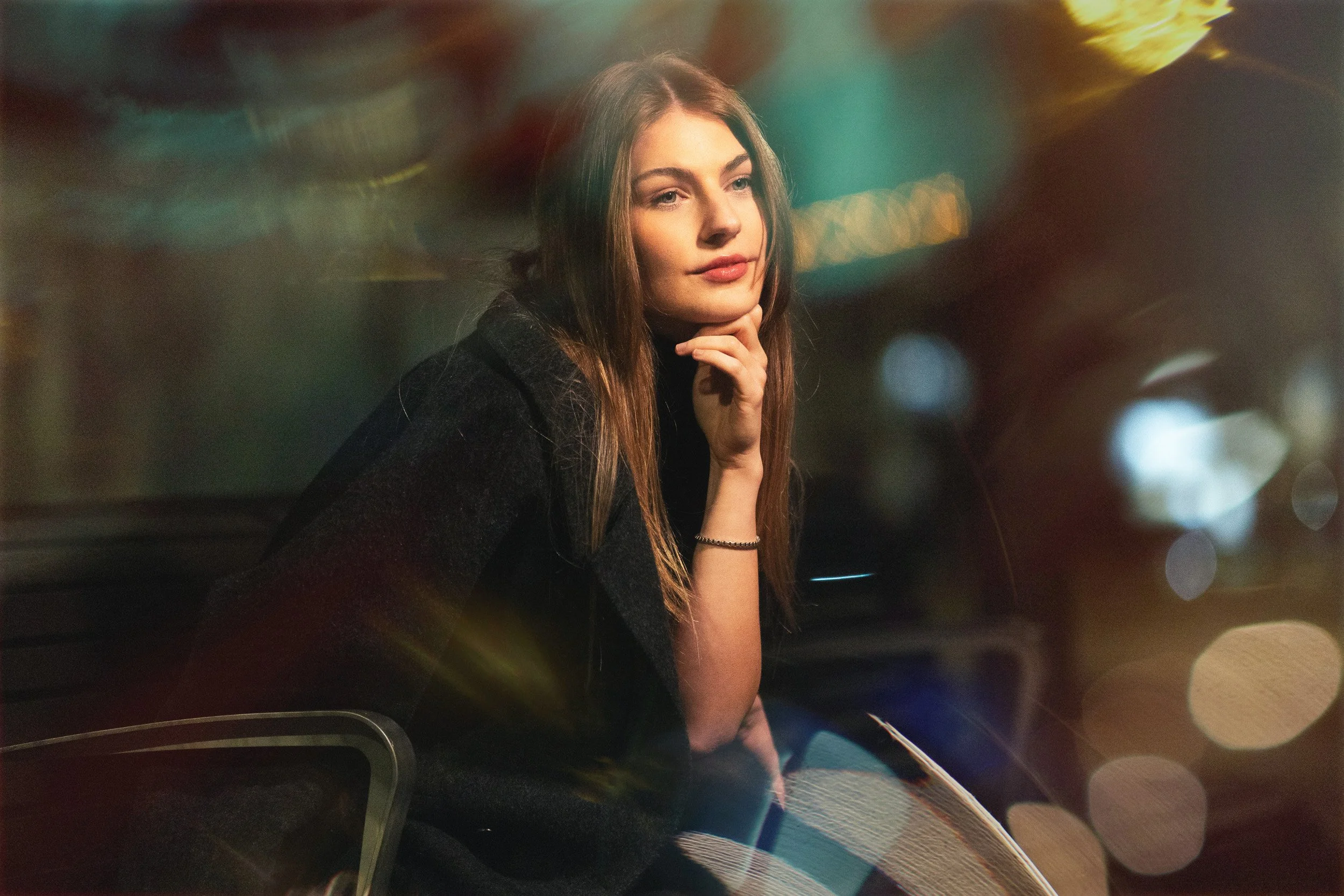
My favourite image from the shoot.
Night portrait photography is all about making the most of a wide aperture—for me f/2.8—to gather more light, create beautiful bokeh and separate the subject from the background. At the same time, it presents very different challenges from photographing during the day: there is far less light available, backgrounds can contain a confusing mixture of colours and brightness levels, and it can be very moody.
At the same time, those same difficulties provide wonderful creative opportunities. Streetlights, shop windows, illuminated buildings and small points of light can all become part of the composition rather than simply serving as a background.
One of the things I particularly enjoyed about this workshop was being encouraged to experiment. The aim was not necessarily to produce a conventional, perfectly lit portrait every time. We could work with reflections, city lights, unusual framing and the varied colours of the surrounding lights to create something more atmospheric.
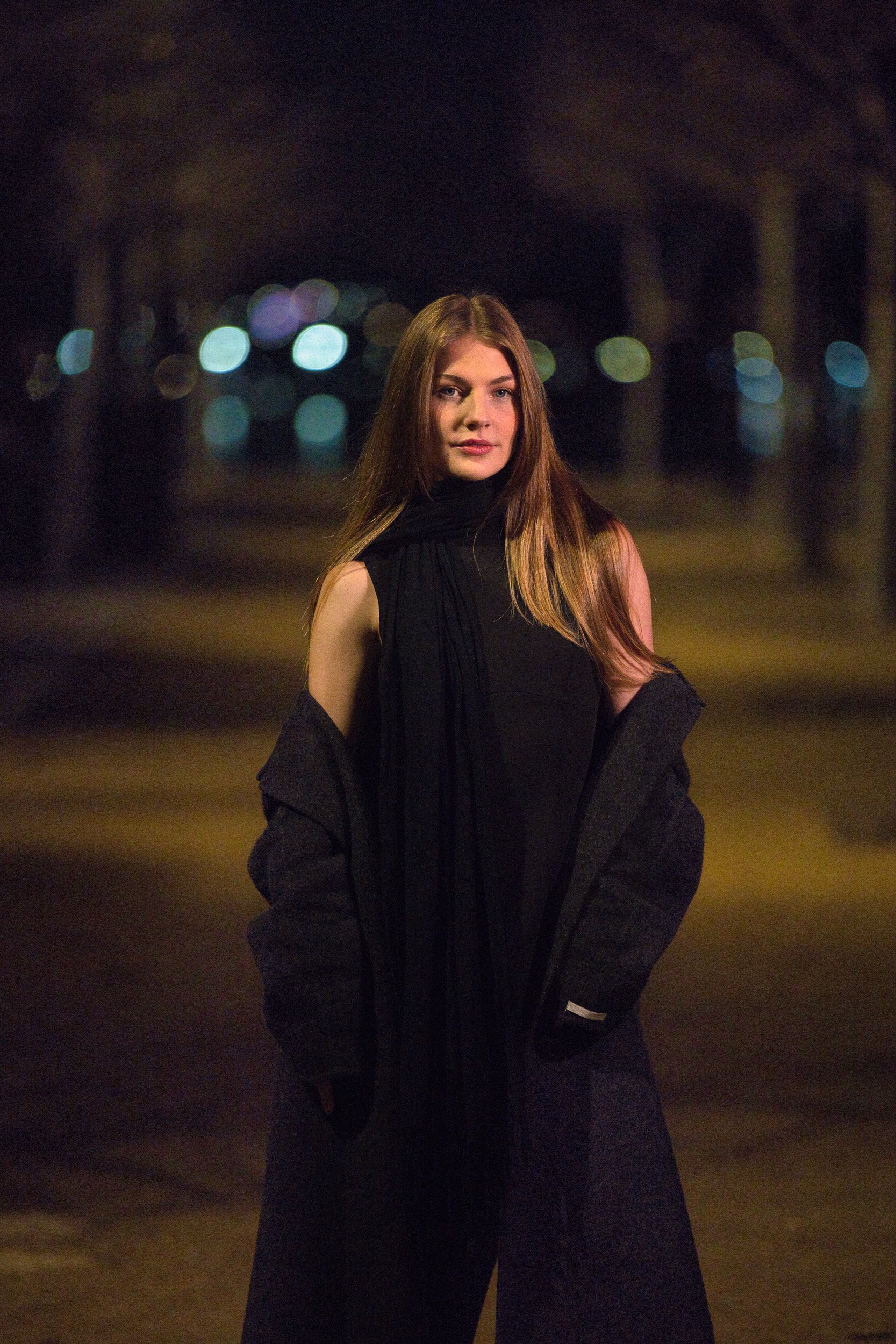
Beginning with a more traditional full-length portrait surrounded by the lights of the city.
We began by considering the relationship between the model and the environment.
The position of every light matters. A small light in the distance can become a large, softly blurred circle when using a wide aperture. Lines of overhead lights can lead the viewer towards the model, while a darker area behind the subject can help separate her face and figure from a busy background.
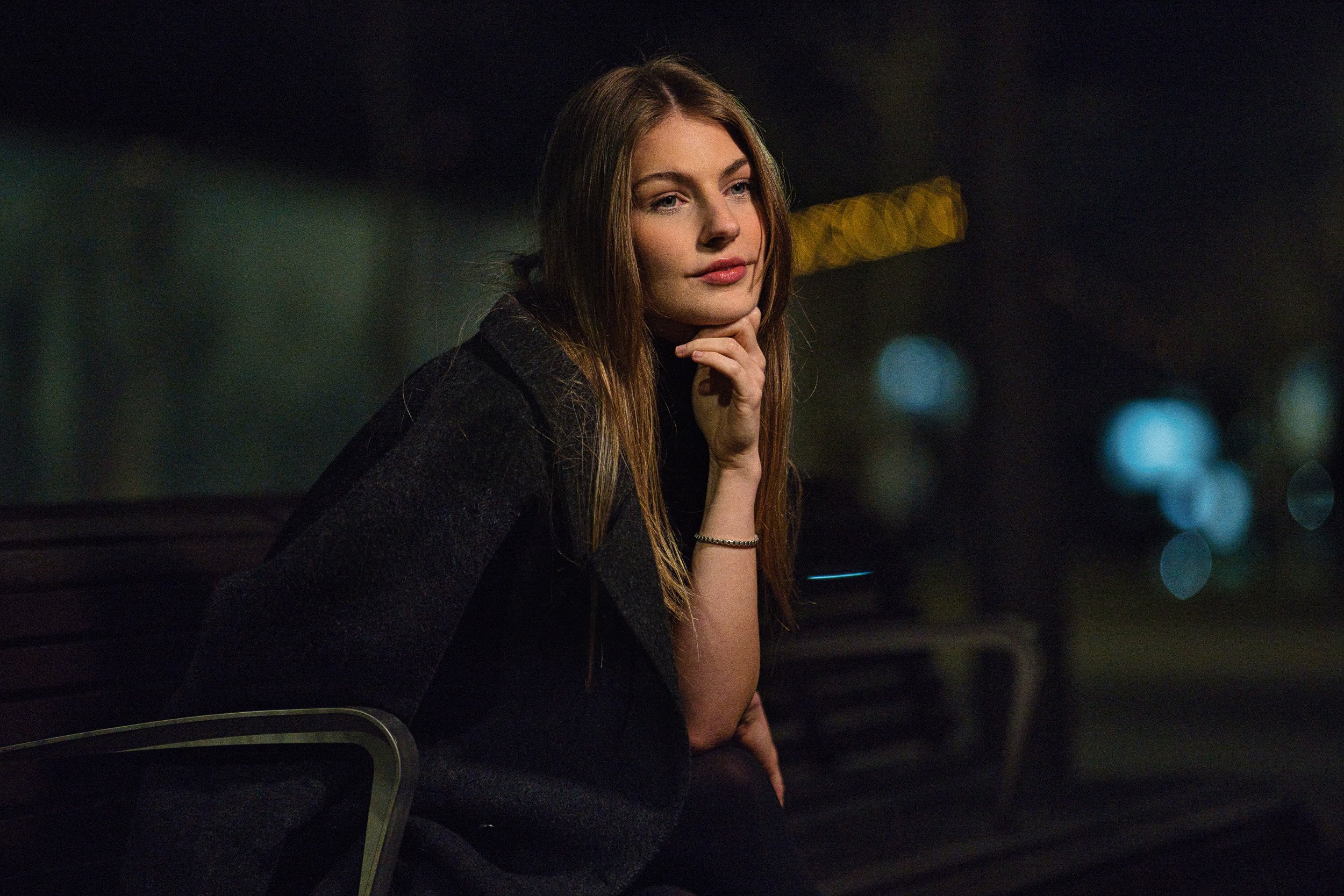
A quieter portrait using a dark background and restrained ambient light.
I liked the subdued mood of this seated portrait. Rather than brightening the entire scene, I allowed much of the background and clothing to remain dark. This kept attention on the model’s face and expression while preserving the feeling of being photographed at night.
It was a useful reminder that a night photograph does not need to look as though it was taken during the day. Shadows are not necessarily something to eliminate. They can contribute depth, atmosphere and a sense of mystery.
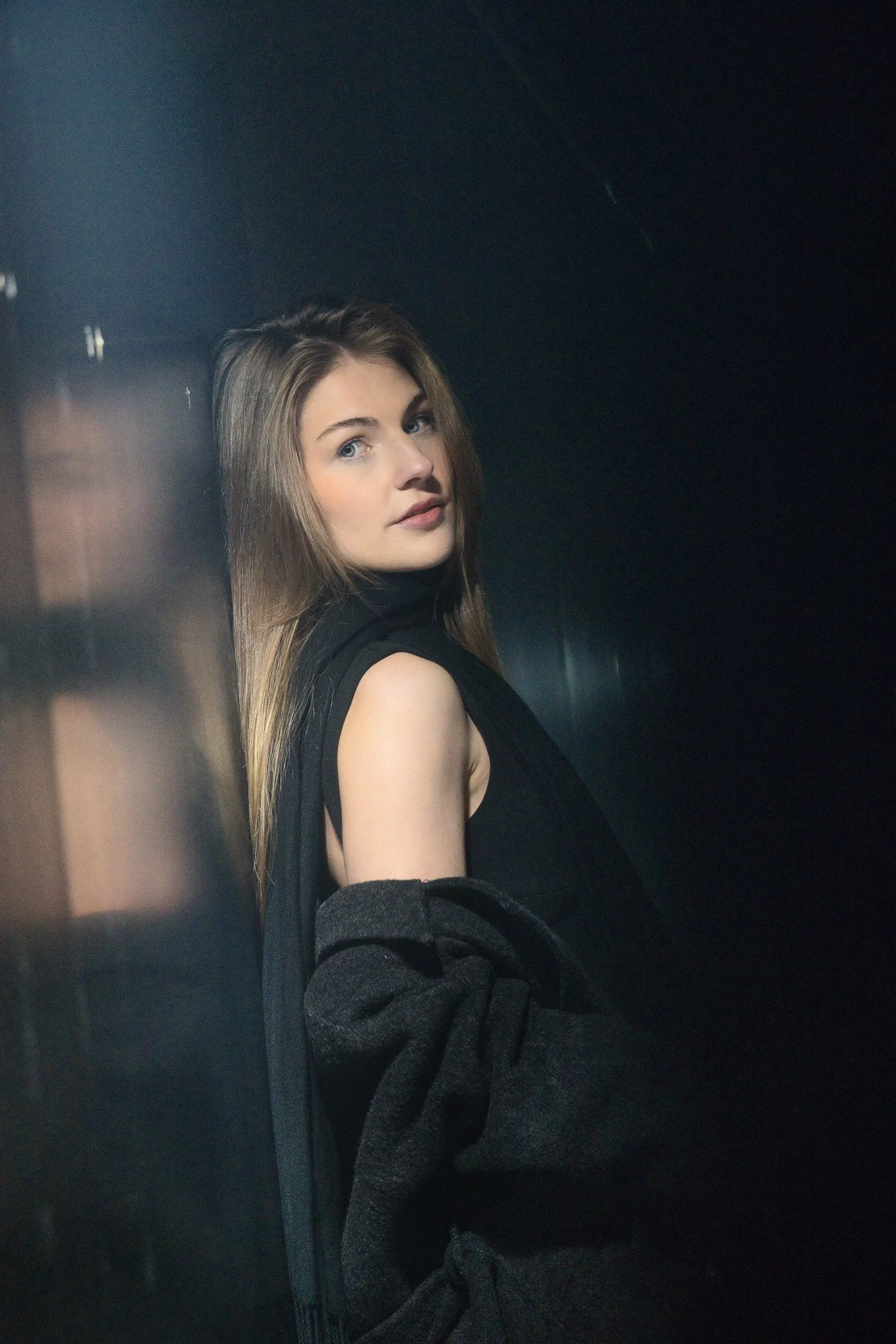
Cool light, a vertical composition and a subtle reflection gave this portrait a more cinematic quality.
The workshop also gave us opportunities to use glass and reflective surfaces creatively. Reflections can be unpredictable, particularly when several lights are striking the glass from different directions. A slight change in camera position can completely alter what appears in the frame.
In this photograph, the cool light and faint reflection helped create an image that felt quite different from the warmer portraits taken elsewhere during the evening. I particularly liked the way the vertical format suited the model’s pose and allowed the darker surroundings to frame her.
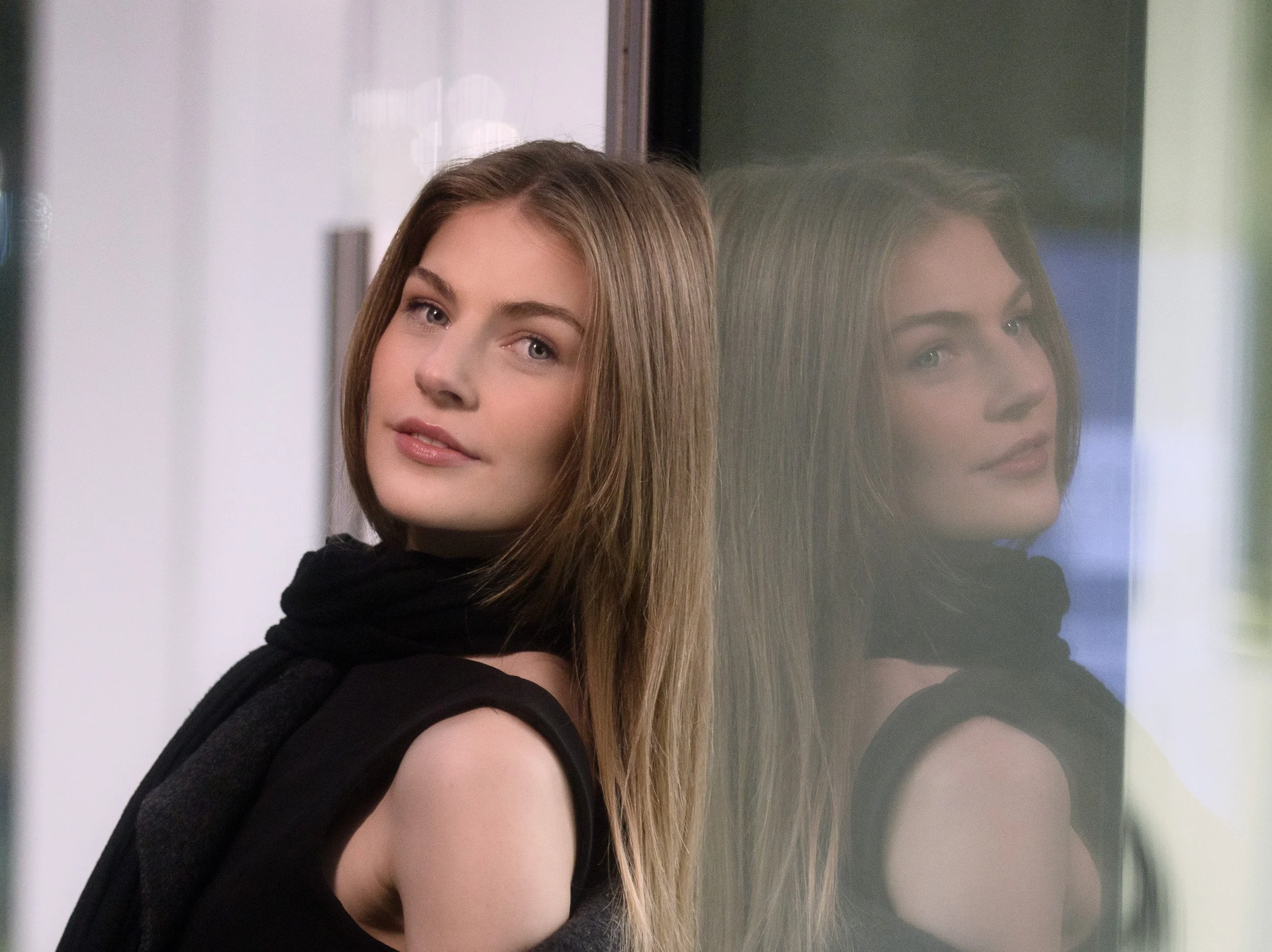
Using a reflective surface to create a second portrait within the frame.
By photographing through or alongside reflective glass, I was able to include both the model and her reflection.
The result is less like a straightforward portrait and more like a small visual story. The duplicated face adds another layer to the composition, while the pale background provides a contrast to the darker images in the series.
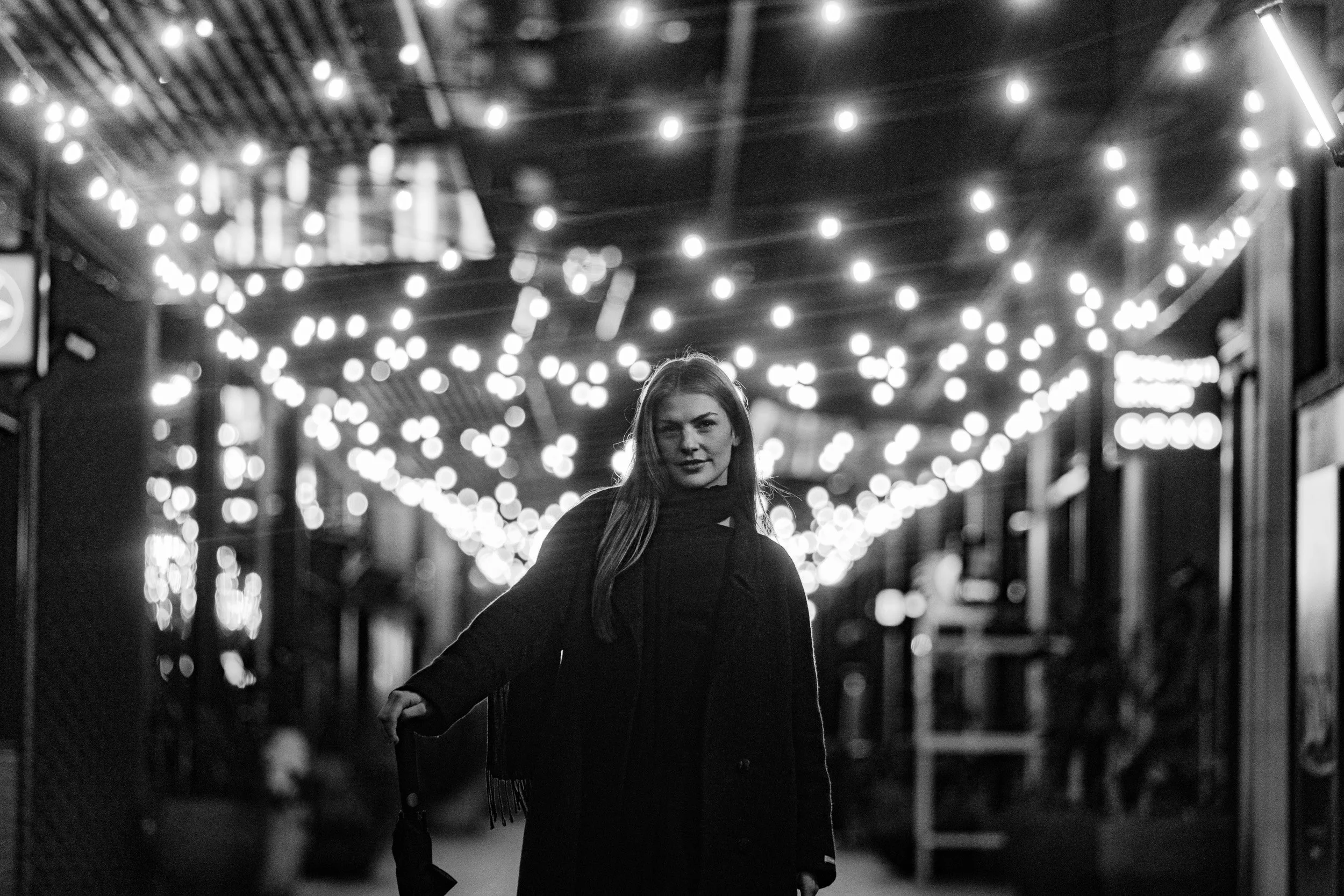
Overhead lights created strong leading lines and placed the model within the wider city scene.
This was my favourite location.
Hanna took an amazing photograph and said, “This is the money shot.”
I looked at the back of his camera and saw a stunning image. Meanwhile, my camera was racking in and out, struggling to find focus, and everything on the screen looked incredibly yellow. My photograph certainly looked nothing like Hanna’s!
The overhead lighting was spilling across the model’s face, creating haze and a very strong yellow colour cast. This was made worse by the fact that I had left my lens hood at home. Hanna was using a high-end Sony camera, while I had my fabulous Canon R5 Mark II. In these particular lighting conditions, the Sony’s auto white balance appeared to handle the strong yellow and mixed lighting much better than my Canon did.
After returning home, I experimented with the camera settings and worked out a custom white balance that I could use in a similar situation involving mixed lighting with a predominance of yellow.
Despite the challenges, and after experimenting with different settings during the workshop, I managed to capture several photographs that I was very happy with. In post-processing, I converted them to black and white, which removed the distracting colour cast and allowed the light, mood and composition to become the focus. I was very pleased with the final results.
In this wider composition above, the model occupies only a relatively small part of the frame, but the lights direct the eye towards her.
This is more of an environmental portrait than a close study of the model. Including the setting helps communicate the atmosphere of the workshop and gives the viewer a sense of where the photographs were made.
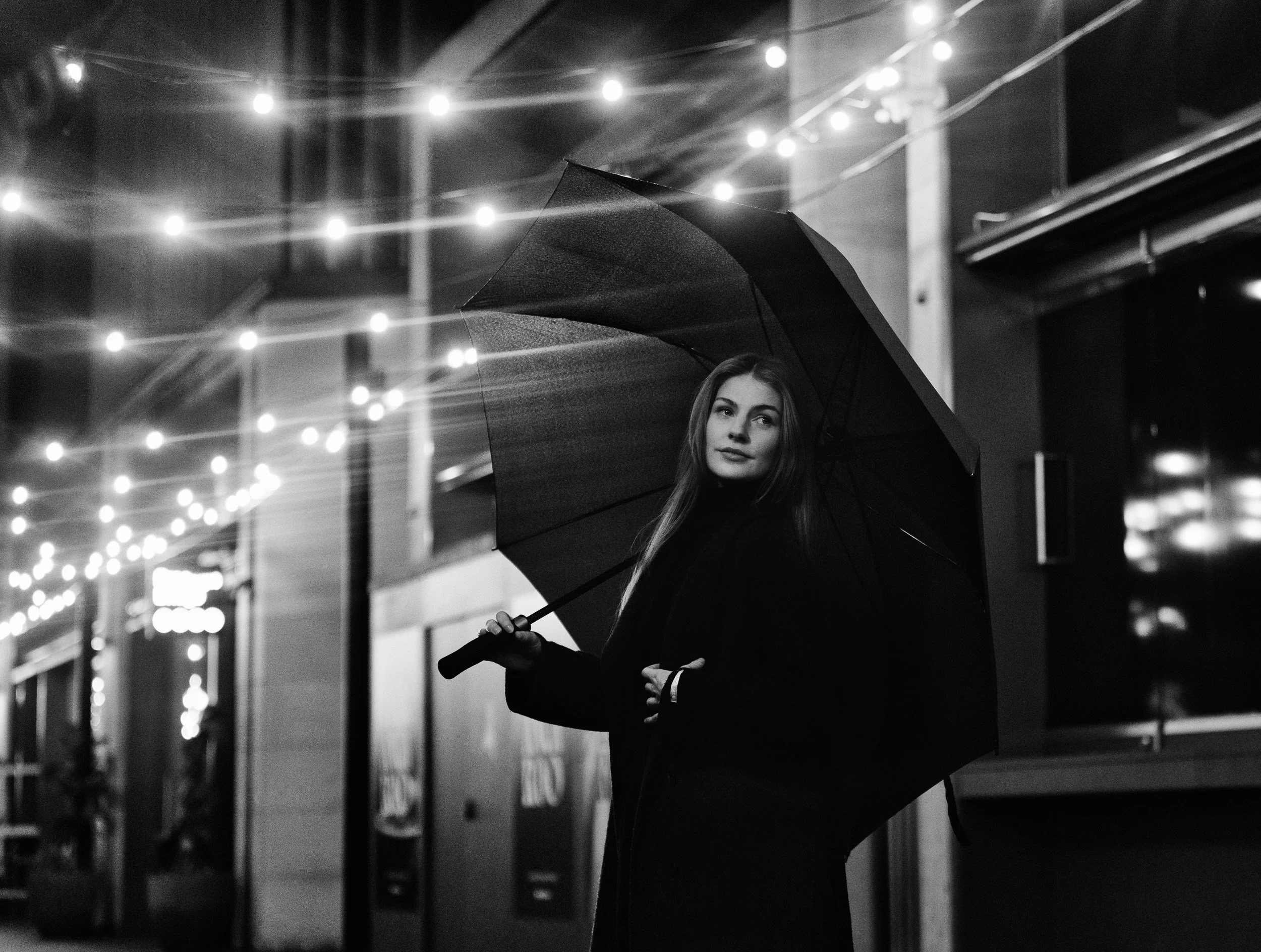
This is one of my favourite images from the shoot.
Towards the end of the workshop, the model put up her umbrella. I preferred this composition because the diagonal lines of the building and the model’s gesture made the image feel more dynamic.
The umbrella, dark clothing and black-and-white treatment give it a slightly film-noir quality, while the many small lights prevent the dark scene from becoming too heavy.
What I took away from the workshop
The evening reinforced how important it is to look beyond the obvious portrait location. A window, a row of lights or a reflective panel may initially appear distracting, but with careful positioning it can become the feature that makes the photograph interesting.
I also came away with a greater appreciation for allowing night photographs to remain dark and atmospheric. It is easy during editing to lift every shadow and correct every unusual colour. Sometimes, however, the mixture of cool and warm light, deep shadow and imperfect reflection is what gives an image its character.
Thank you to Hanna Saba and Sony Scene for an enjoyable and very practical workshop. It was a valuable opportunity to photograph a model in an urban environment, experiment with different approaches and come home with a varied collection of images to develop further.
