
Photographing Whales
Behind the scenes
In 2015, our adventure took us to Vava’u — one of Tonga’s four main island groups — world-famous as both a nursery and a playground for humpback whales. The word “nursery” sounds so gentle, yet these babies weigh close to a tonne and measure over four metres long! Thankfully, their poor mothers carry them in the water during a twelve-month pregnancy.
We chose Tonga because, back in 1978, the Kingdom declared all its waters a whale sanctuary — one of the first in the world. In 2013, Tonga went even further, introducing detailed Whale Watch and Swim Regulations. Only licensed boats with certified guides can take swimmers, and strict limits govern distance, group size and behaviour. Freediving toward whales is banned, and all encounters must remain at the surface. These rules ensure the safety and wellbeing of both whales and humans, keeping every meeting calm, whale-led, and sustainable.
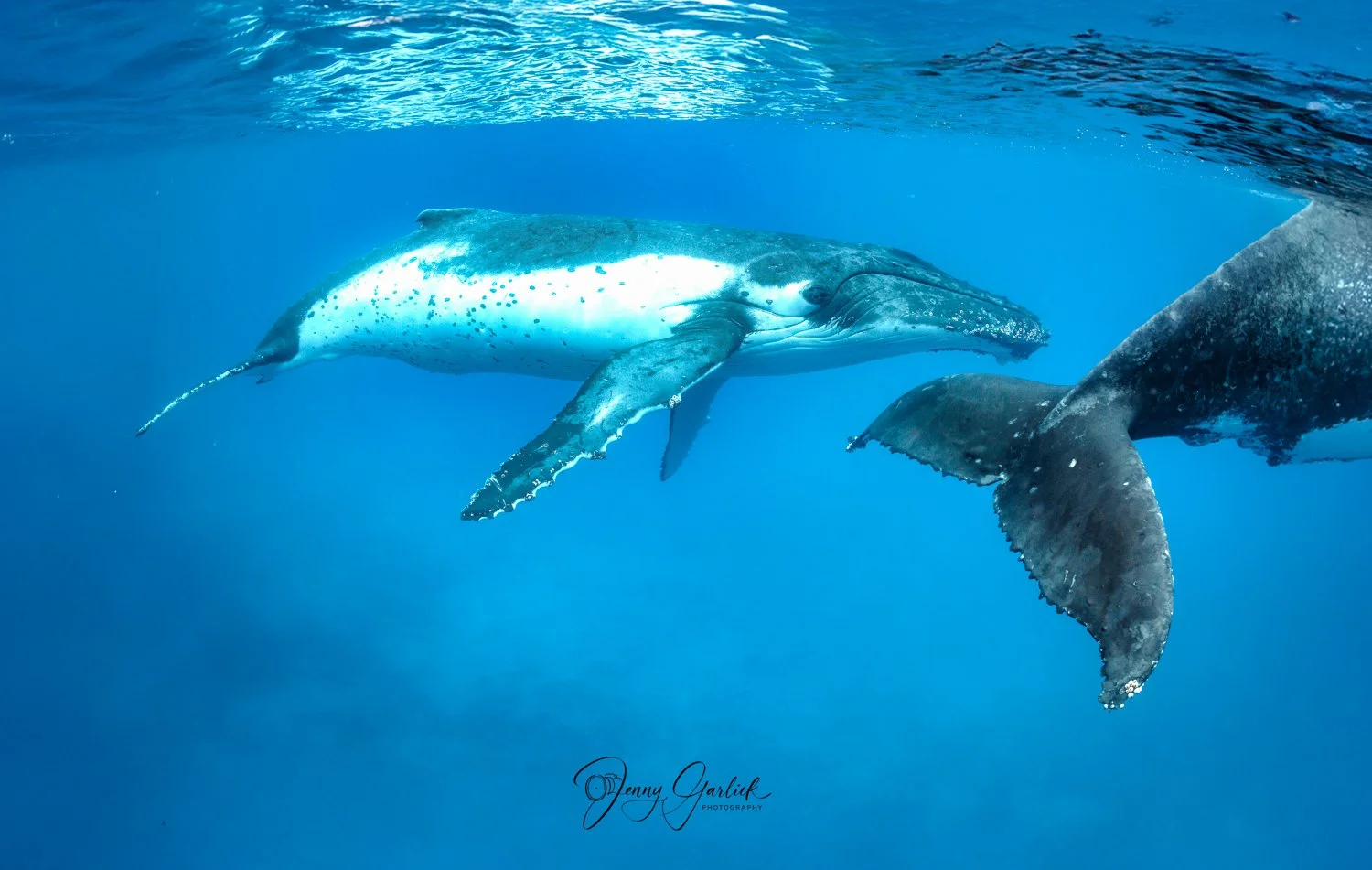
This was my second attempt at underwater photography, and I approached it with some trepidation. My first try — in the Galápagos — had been a total disaster. Armed with a rented relic that looked like it belonged in a museum, I tried to take photos while scuba diving. I spent more time wrestling with the camera than watching my depth, and at one point, all my dive buddies descended and unknowingly left me behind. Still fiddling with the camera at the surface, I finally looked up to find everyone gone. That camera was swiftly retired.
In Tonga, I borrowed a Canon EOS M in a Nauticam housing — hardly state-of-the-art. The battery life was short, autofocus unreliable, and half the time I couldn’t even see through the viewfinder. Still, it was a definite step up from my silver Galápagos monstrosity, and I reminded myself that sometimes the best photos are simply the ones etched in memory.
For six days, we spent eight hours a day scanning the horizon for whales. When our captain or spotters found a pod, the shout would come:
“Go, go, go!”
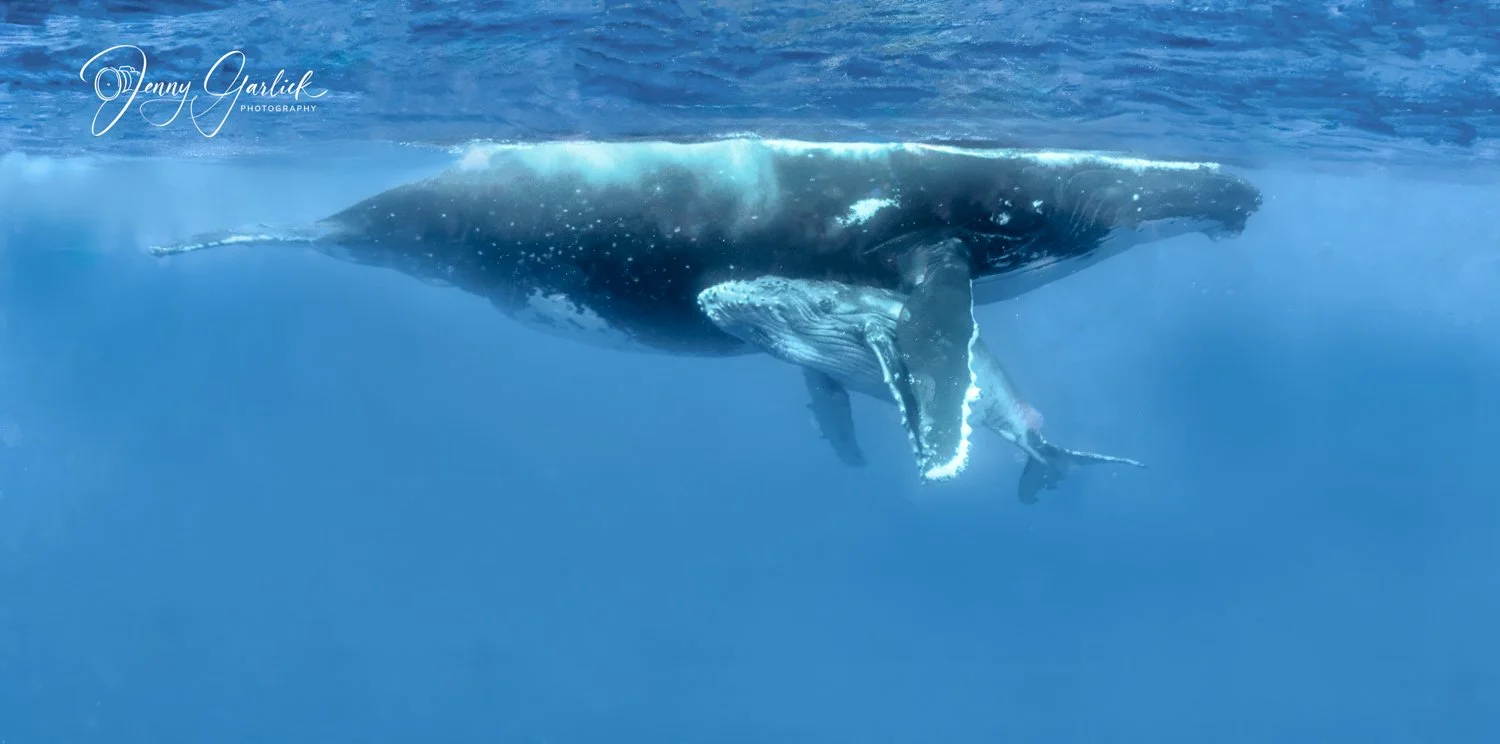
We’d slip into the water as quietly as possible, careful not to splash our fins — and then, suddenly, we were floating just metres away from magnificent humpbacks. Most encounters were with mothers and calves, often accompanied by an escort. Sometimes the pair would rest together, suspended in the blue waters.
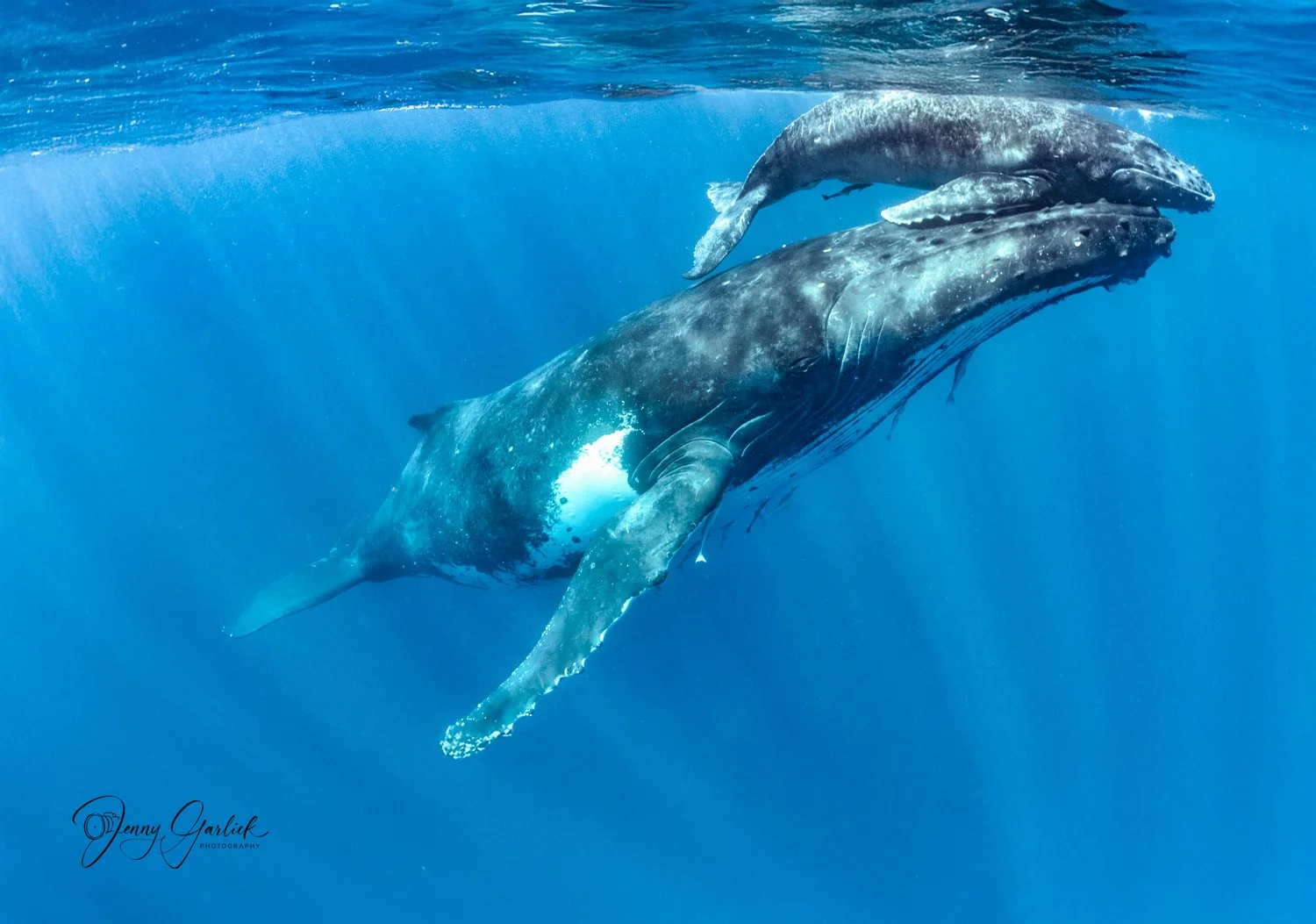
Mother and Calf, Vava’u Lagoon
A moment of stillness — mother resting below, calf rising to the light, safe in Tonga’s protected waters.
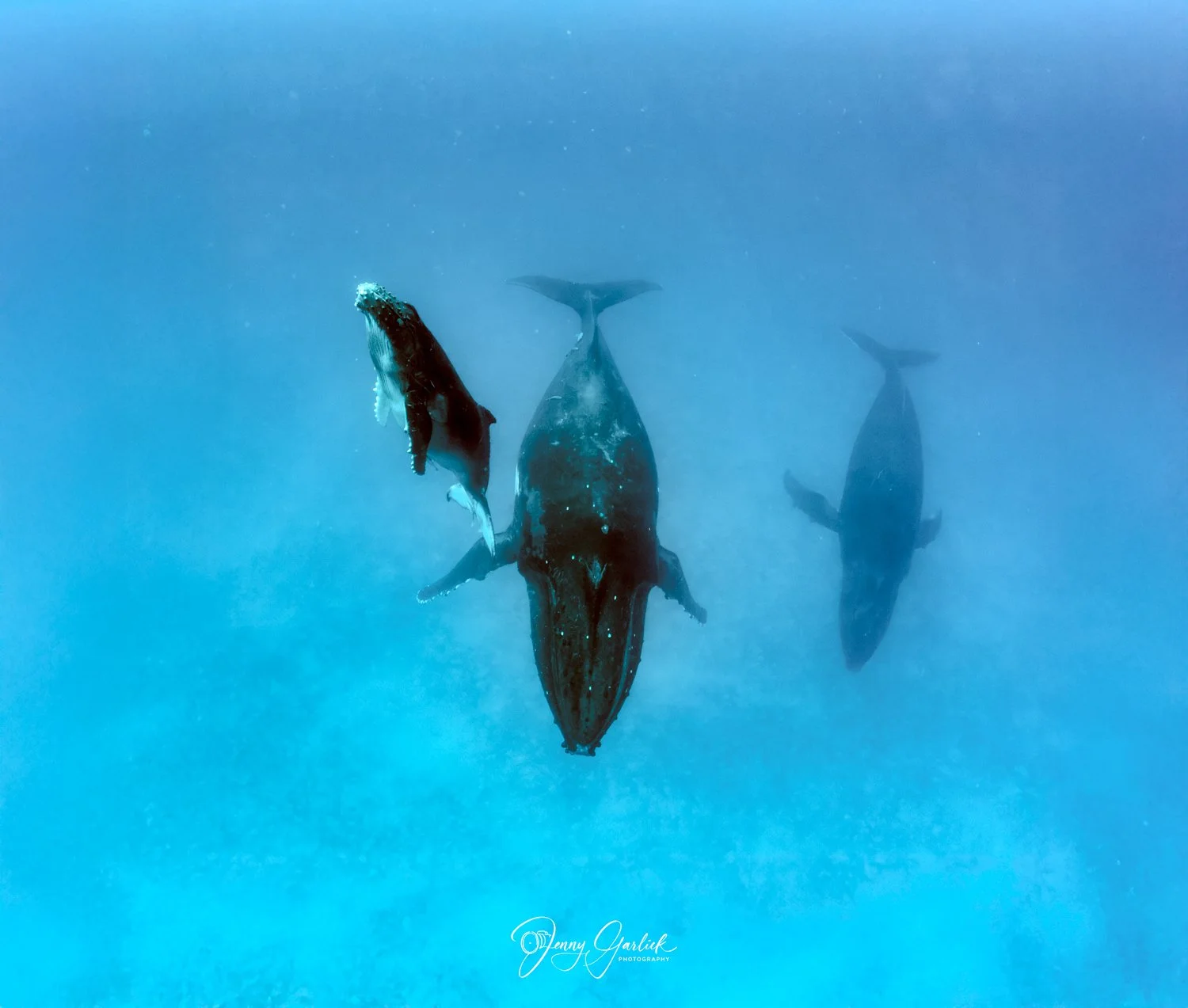
Mother, calf and the escort below. The escort’s presence may incidentally help shield the calf from predators, but his main motivation is reproductive opportunity, not caregiving
Other times, the calf would twist, roll in playful curiosity and glide on the surface before retreating under its mother’s enormous fin. The mothers were calm and unhurried, gently lifting a pectoral fin if we drifted too close.
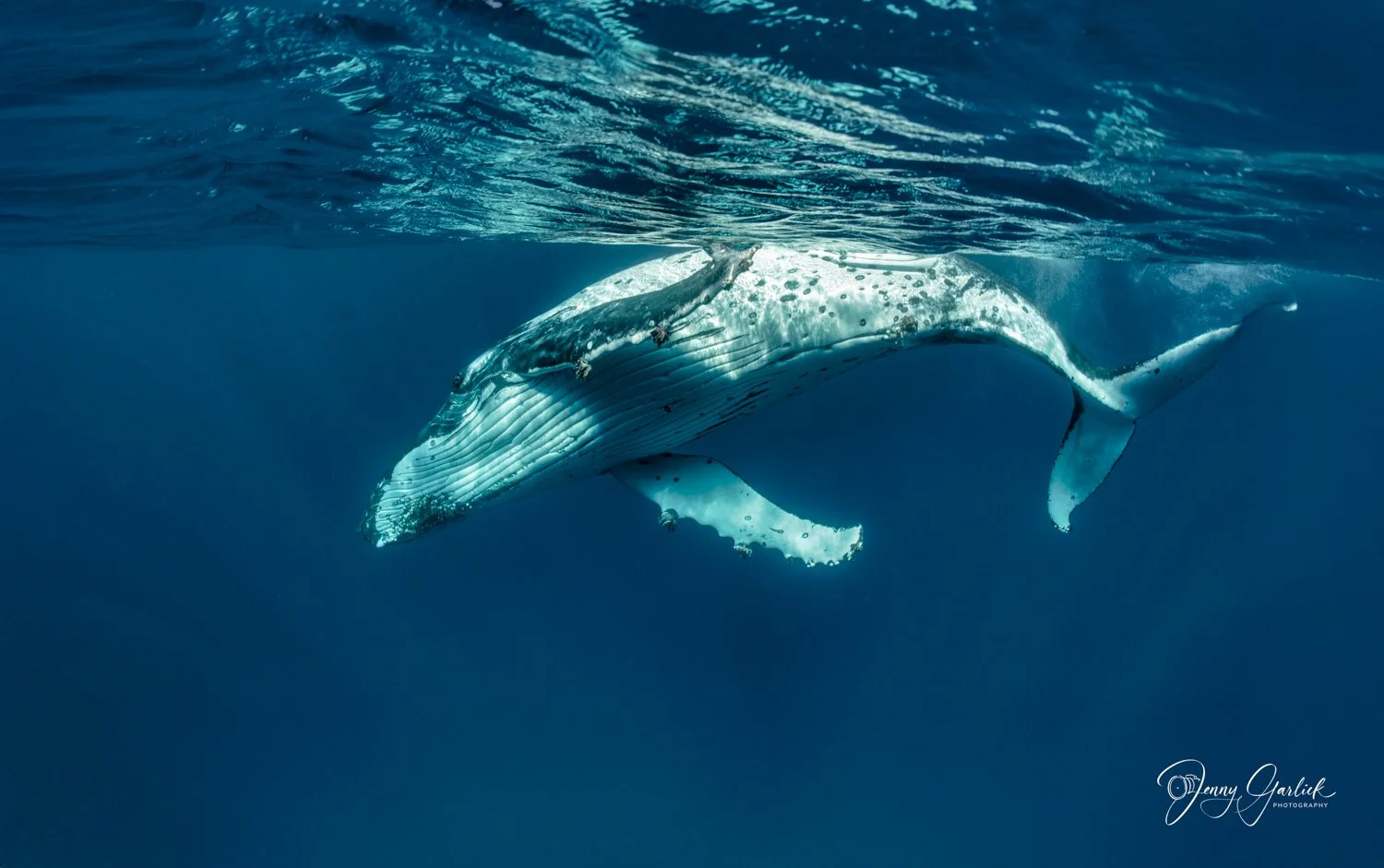
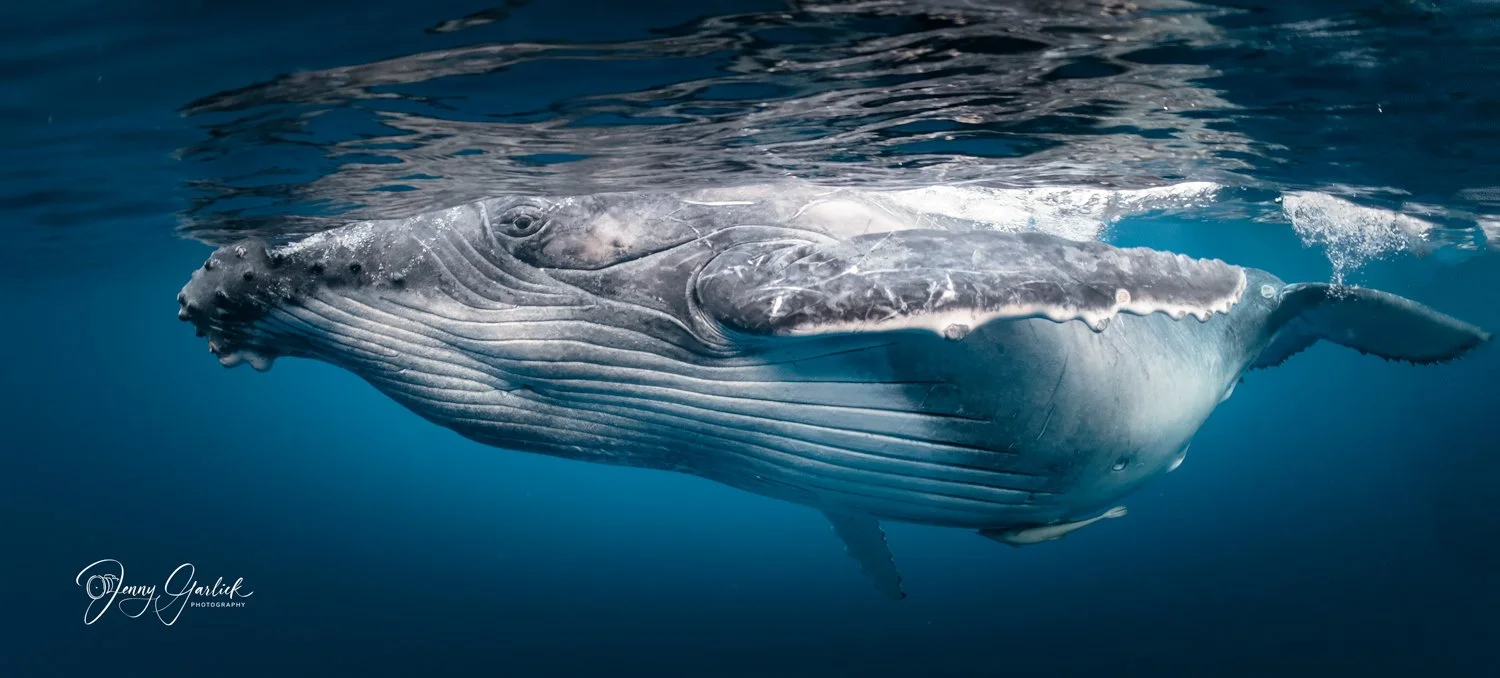
Playful calf frolicking in the water.
Safe under mother’s fin, ready for a suckle. A lactating female may produce up to 500 litres of rich, fatty milk per day to feed her newborn.
Sometimes, the whales would hang motionless, bathed in shafts of sunlight that pierced the water like the stained glass of an underwater cathedral. Moments like those stay with you forever — humbling, silent reminders of just how small we are beside these gentle giants.
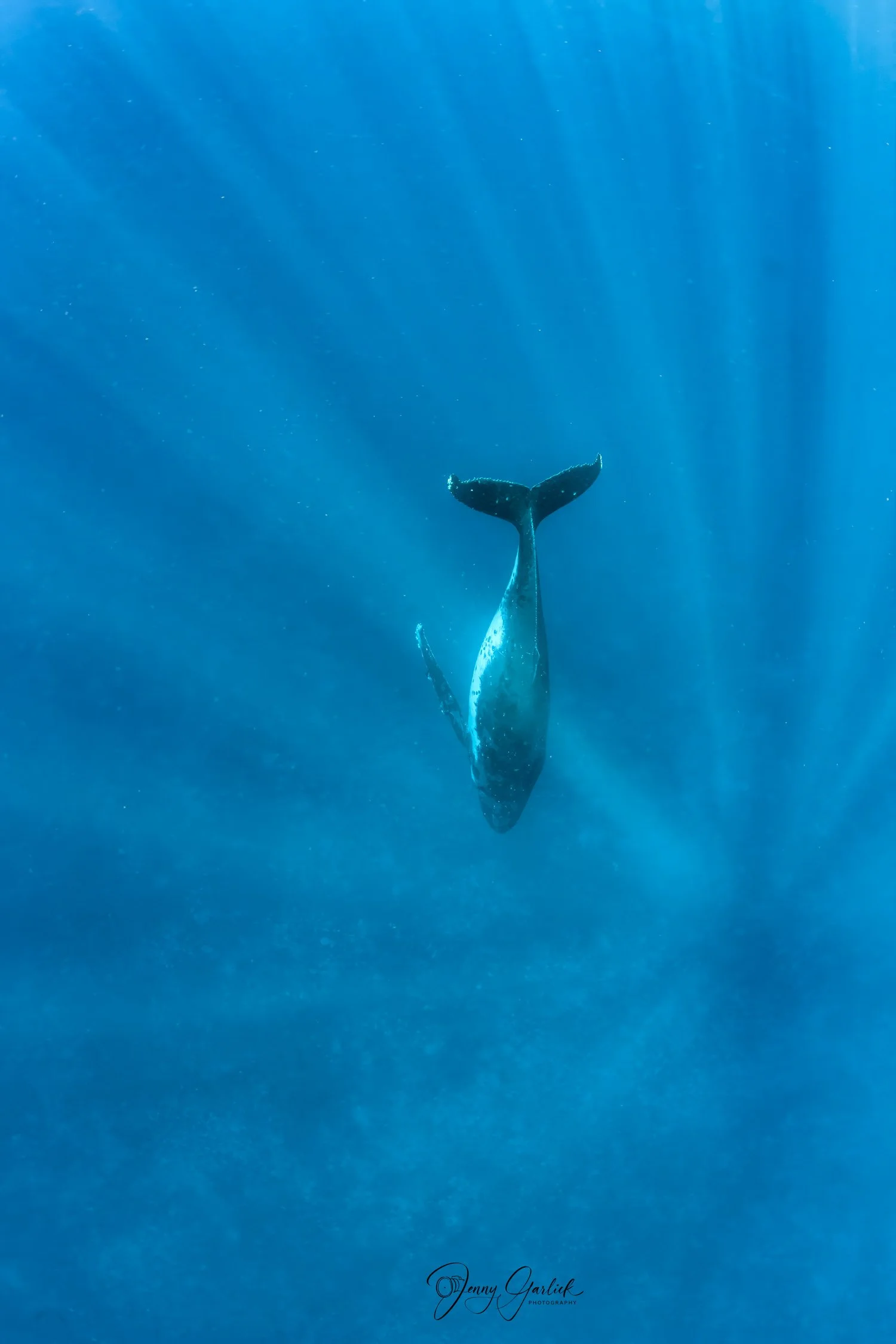
Sunlight poured through the sea , illuminating these gentle giants in their underwater sanctuary.
I was fascinated that barnacles attach themselves to humpback whales, forming hard, white crusts on their skin, especially around the head, fins, and tail. These hitchhikers don’t harm the whale but can create drag and leave distinctive markings that help researchers identify individual whales.
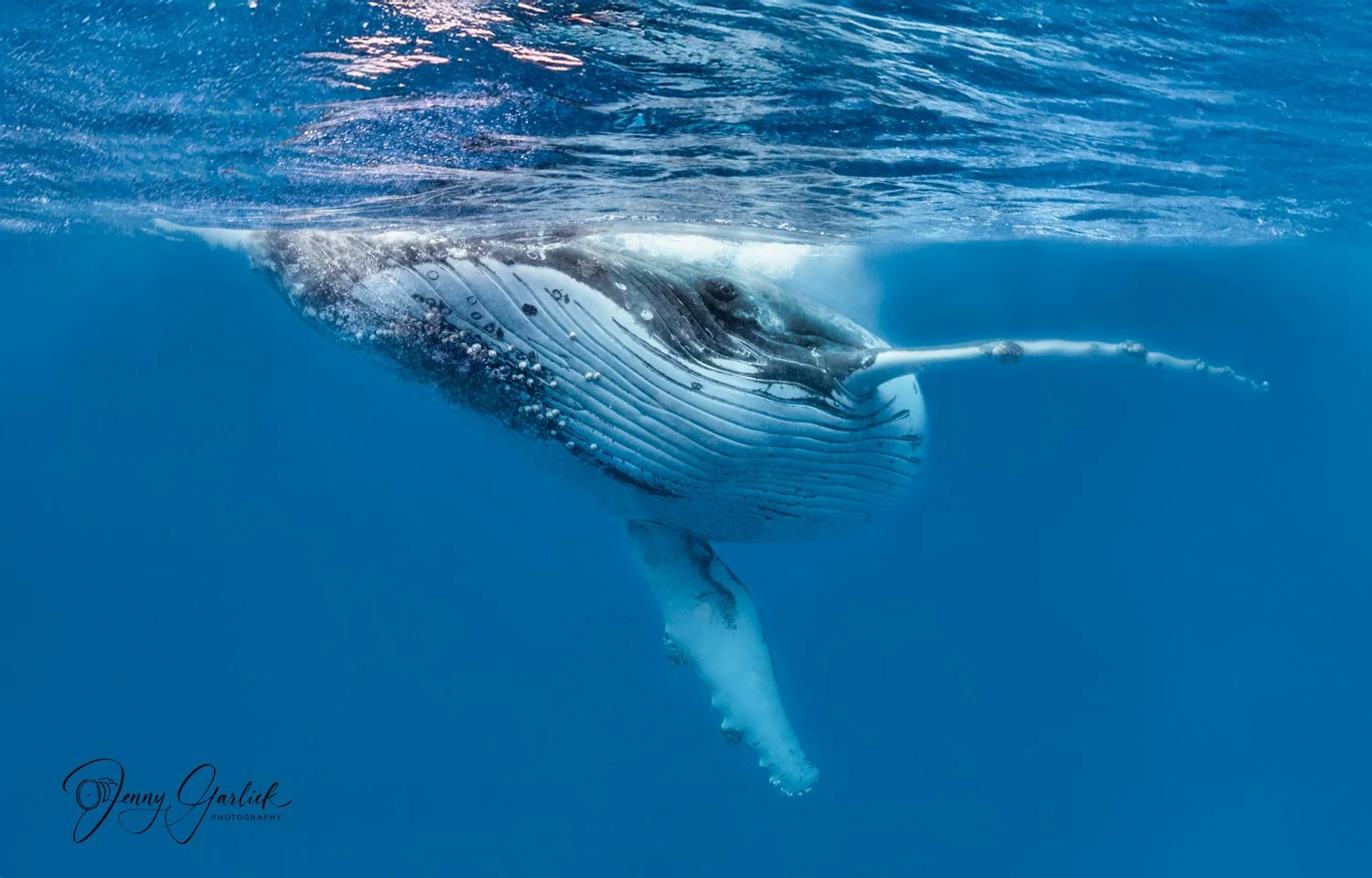
Barnacled Grace
Weathered skin, trailing barnacles — marks of survival on a creature that embodies strength and serenity
The tubercles were also very interesting. They are the large, rounded bumps found along a humpback whale’s pectoral fins and on its head. Each bump contains a hair follicle that helps the whale sense movement and changes in water flow, improving maneuverability as it swims.
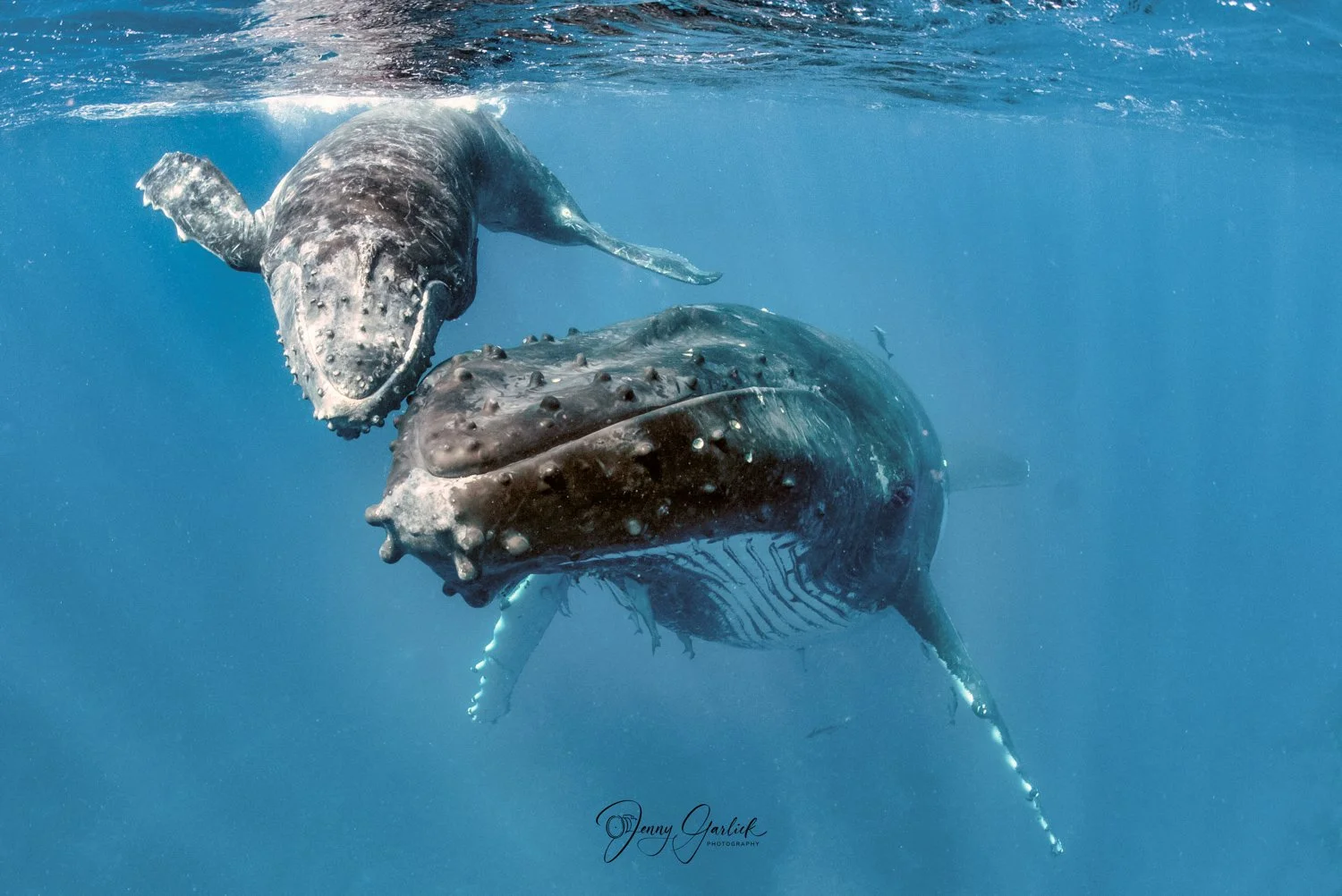
Tubercles on the face and pectoral fins.
In the evenings, my companions — experienced underwater photographers with all the best gear — would download their incredible images. I tried to be brave, but privately I cried as I looked at the back of my camera and saw my own not-so-incredible results. Disheartened, it took me a few months to summon the courage to download my photos. Underwater photography is brutally hard: colours vanish, light scatters, focus wobbles, and everything turns flat and blue. Still, with Lightroom presets, the magic Dehaze slider, and a good deal of patience, my images slowly began to come to life. I even discovered two that I truly loved — one went on to win a small international competition. It wasn’t about the $50 prize; it was the validation that I hadn’t given up.
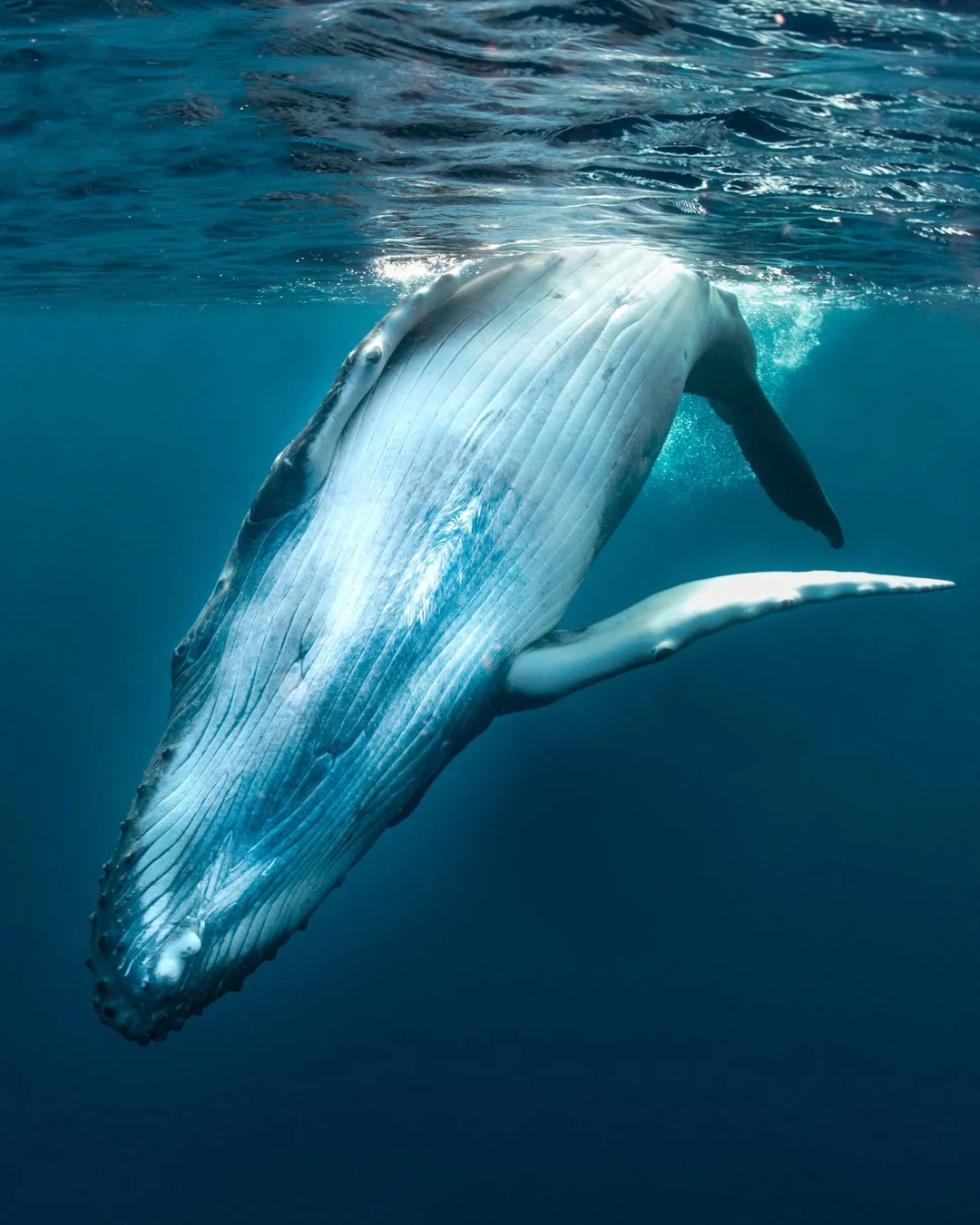
My favourite image number 1
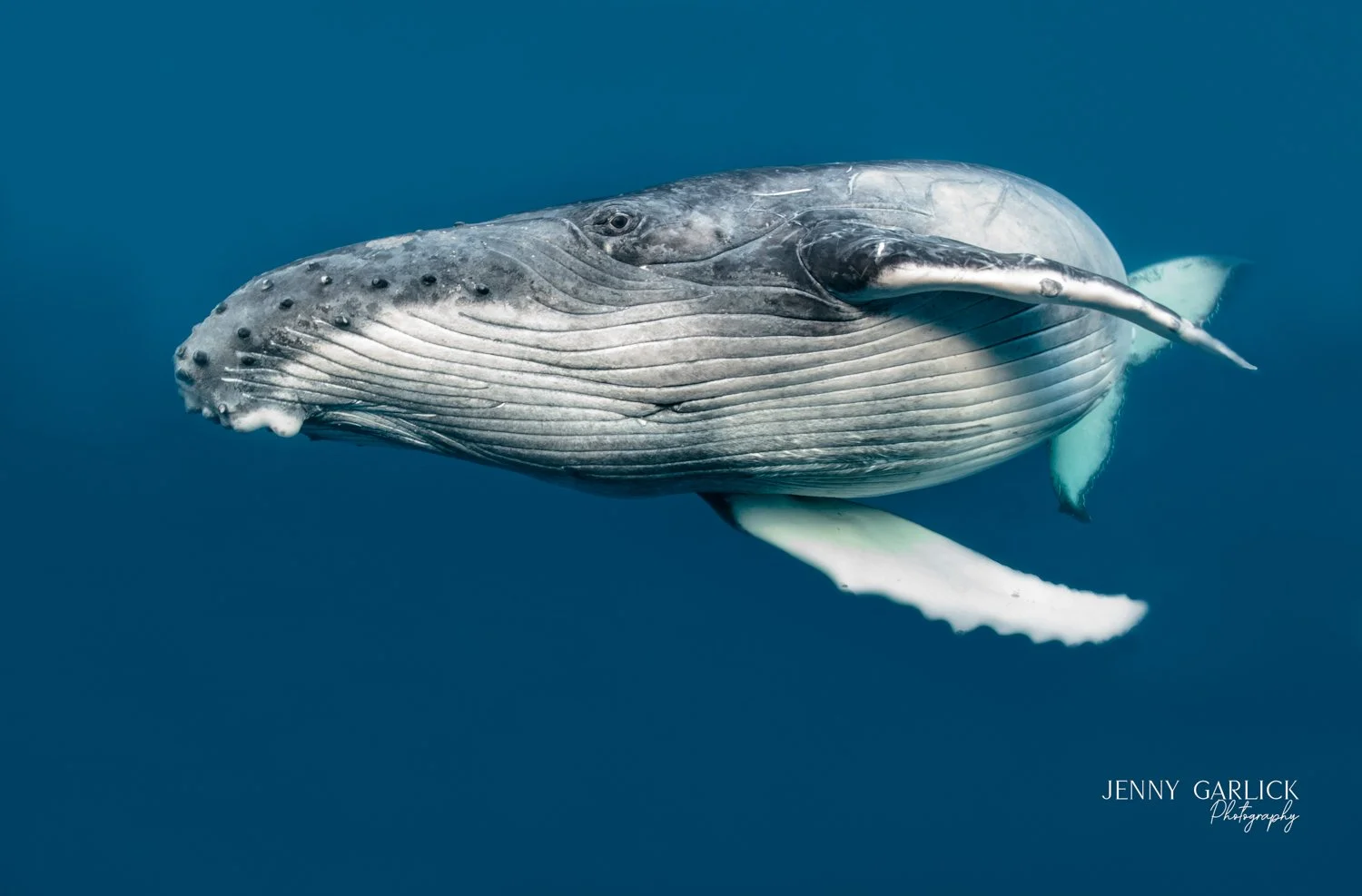
Favourite Image Number 2
These images now hang proudly in our home, in the homes of two of our daughters, and even in my son-in-law’s office.
Now, eleven years later, I’ve found more photographs from that trip that I truly love. With time, better editing capabilities and experience, I see them differently — and appreciate how far I’ve come.
This journey has taught me valuable lessons:
Don’t compare your work to others. Your creative path and your images are uniquely your own.
Always download and review your photos, even if you think they’re not good enough. You may be pleasantly surprised, as I was.
Keep your images. Revisiting them years later can reveal unexpected treasures and post production improves constantly
In underwater photography, experience is priceless, and having the right equipment — in good working order — is essential.
Above all, remember that witnessing and appreciating nature is a true privilege. The memories you carry are sometimes the most beautiful images of all.
What Is Happening with the Whales Now
The number of humpbacks visiting Tonga is rising — a fragile but real environmental success. Once devastated by whaling, their population is slowly recovering under the sanctuary’s protection. But challenges remain: climate change, ship strikes, and even well-meaning tourism can still pose risks.
I sometimes wonder whether our presence in the water disturbed those mothers and calves, though they seemed calm and accepting. If research ever shows that swimming with them causes harm, I wouldn’t go again — no photograph is worth distressing such extraordinary animals.
For now, I hold on to the memory: floating in sapphire water beside a mother and her calf, sunlight streaming down like a blessing, the faint echo of a whale song carrying through the deep.
